
"Before there were textbooks, there were stories. Before there were experts, there were mothers." BEAUTÉLANIN™
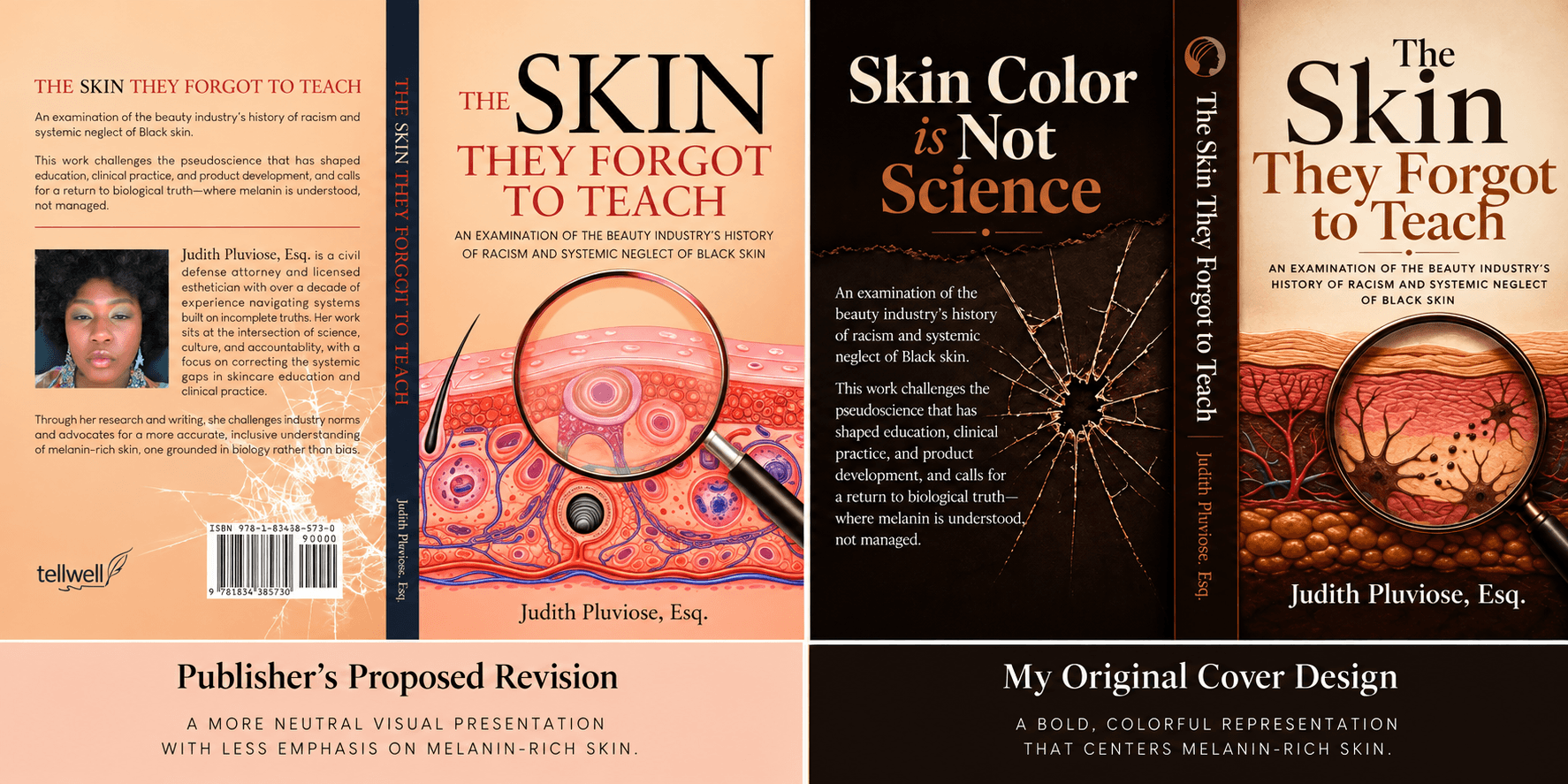
When Melanin Becomes a Marketing Problem
I wrote a book challenging the historical neglect of Black skin in beauty education. Then I was told that my cover, which visibly centered melanin-rich skin, was too subjective. The experience raised a question that goes far beyond publishing: When did representation become mistaken for bias?

Melanin: Biology Beyond Color
Melanin is often introduced as the pigment responsible for skin, hair, and eye color, but color is only the beginning of its story. Melanin is a complex biological polymer produced within melanosomes, shaped by chemistry, cellular signaling, genetics, and our relationship with light. From absorbing ultraviolet radiation to participating in photoprotection and adaptive responses, understanding melanin requires us to move beyond what pigmentation looks like and examine the biology that makes it possible. Pigment is what we see. Melanin is part of the biology behind what we see.
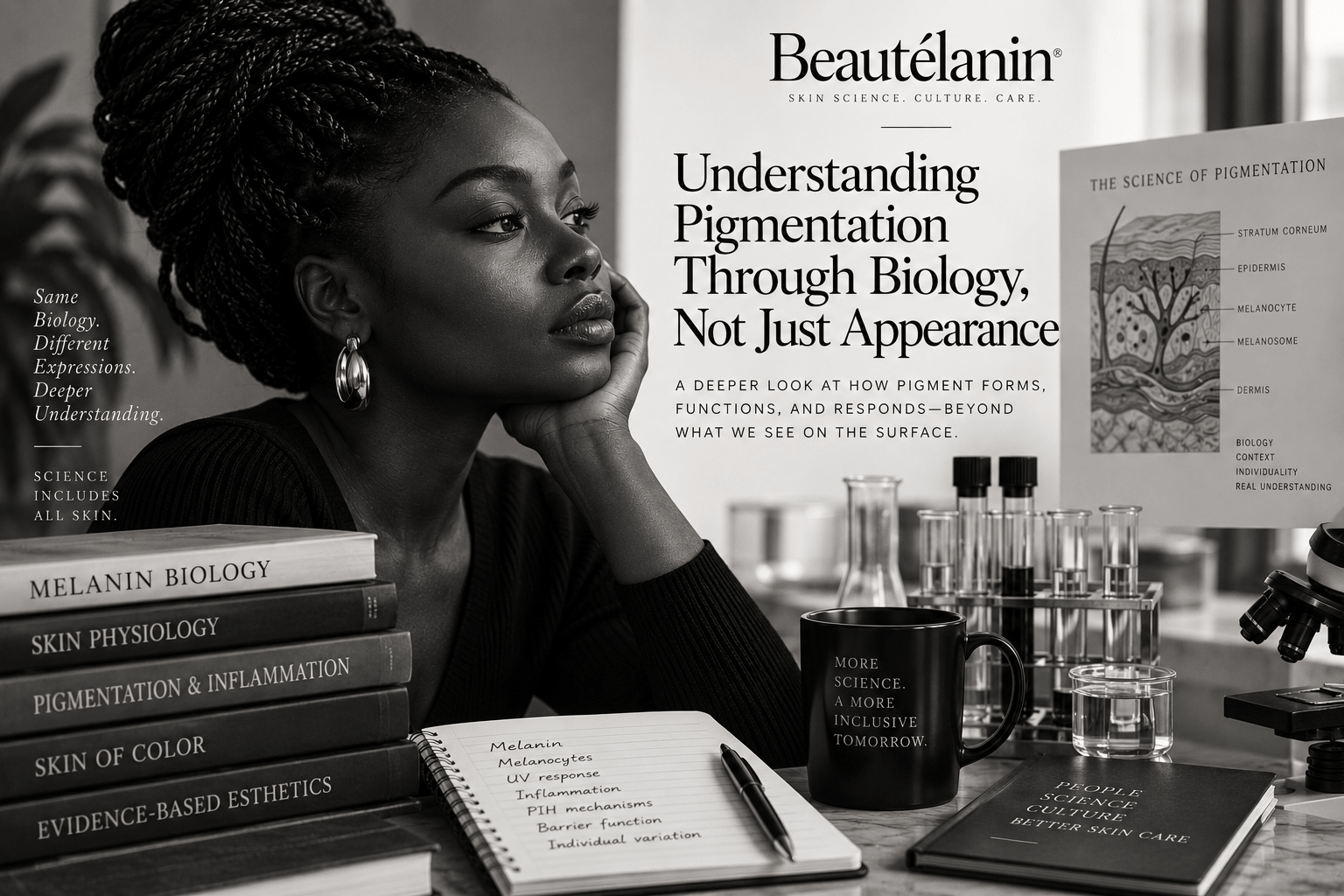
Understanding Pigmentation Through Biology, Not Just Appearance
Pigment is rarely the beginning of the story. It is often the visible record of countless biological conversations that have already taken place beneath the surface. This article introduces the MRBUP® Behavior Assessment Framework, a behavior-based approach to understanding pigmentation through the lens of melanin biology, inflammatory response, barrier resilience, ultraviolet legacy, and pigment memory. Rather than treating discoloration as an isolated cosmetic concern, MRBUP® encourages practitioners to ask a more meaningful question: What is the skin responding to? By shifting the focus from appearance to behavior, the framework offers a more thoughtful and individualized approach to clinical observation, treatment planning, and long-term skin health.
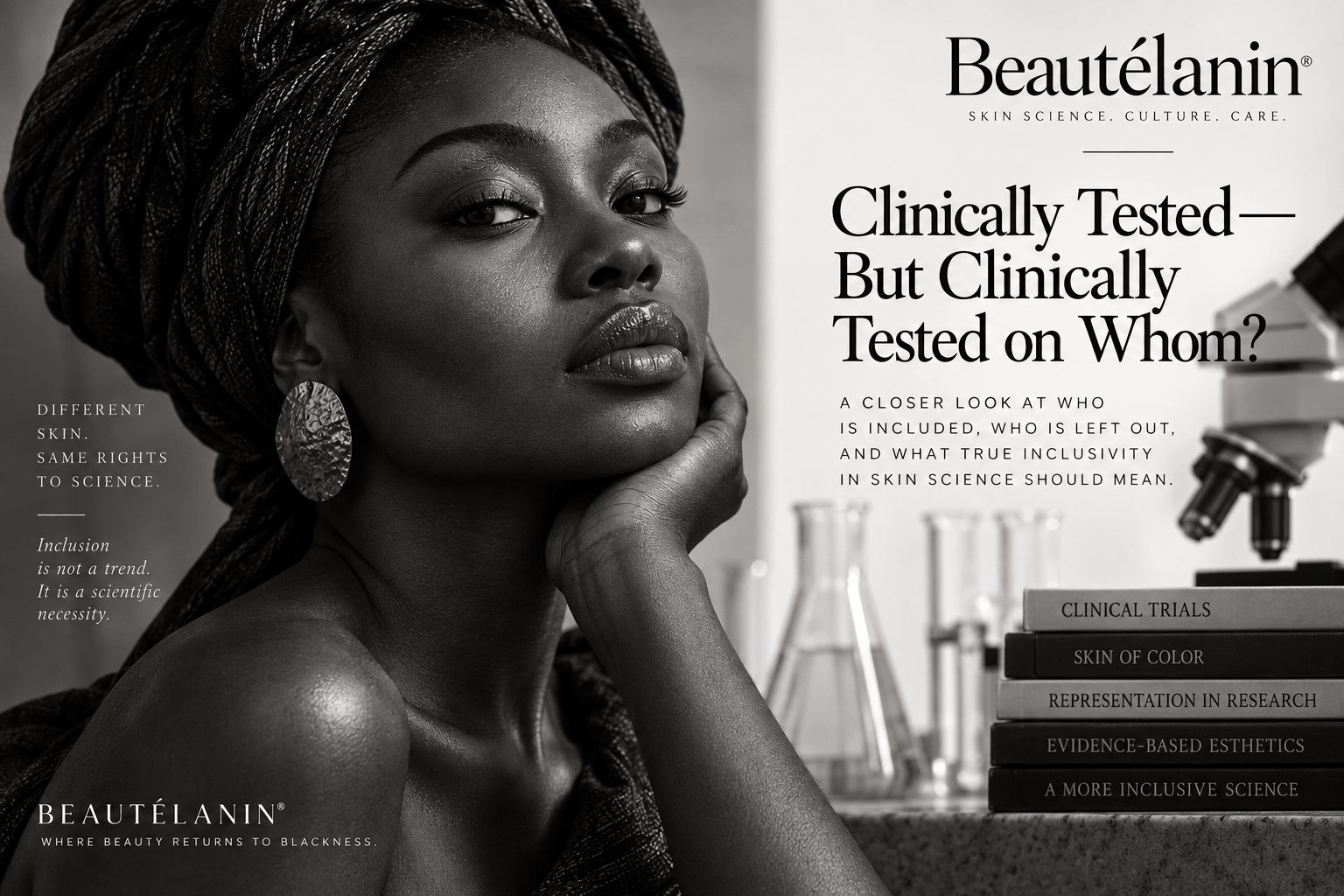
Clinically Tested—But Clinically Tested on Whom?
“Clinically tested” sounds reassuring—but the phrase tells us very little about who was actually represented in the testing. Were melanin-rich participants included? In meaningful numbers? Were outcomes assessed with methods capable of recognizing responses across different complexions? Beautélanin® examines the questions that should come after the clinical claim, and why representation in skin research is not simply about diversity. It affects what we know, what we measure, and how confidently evidence can be applied to the skin sitting in front of us.

Advocacy Is Not Opposition: What Happened When We Questioned a Zinc Oxide Headline
Advocacy does not require rejecting science. Sometimes it begins by reading the study, examining what was actually tested, and asking whether the public-facing message goes further than the evidence. When Beautélanin® questioned a sweeping headline about zinc oxide and sunscreen toxicity, we were not trying to defend an ingredient, we were asking for scientific precision. A researcher answered, the public explanation became clearer, and the conversation opened the possibility of something more: better questions, more representative research, and perhaps future collaboration. Because engaging with science means respecting what the evidence establishes, and having the courage to name what it does not.
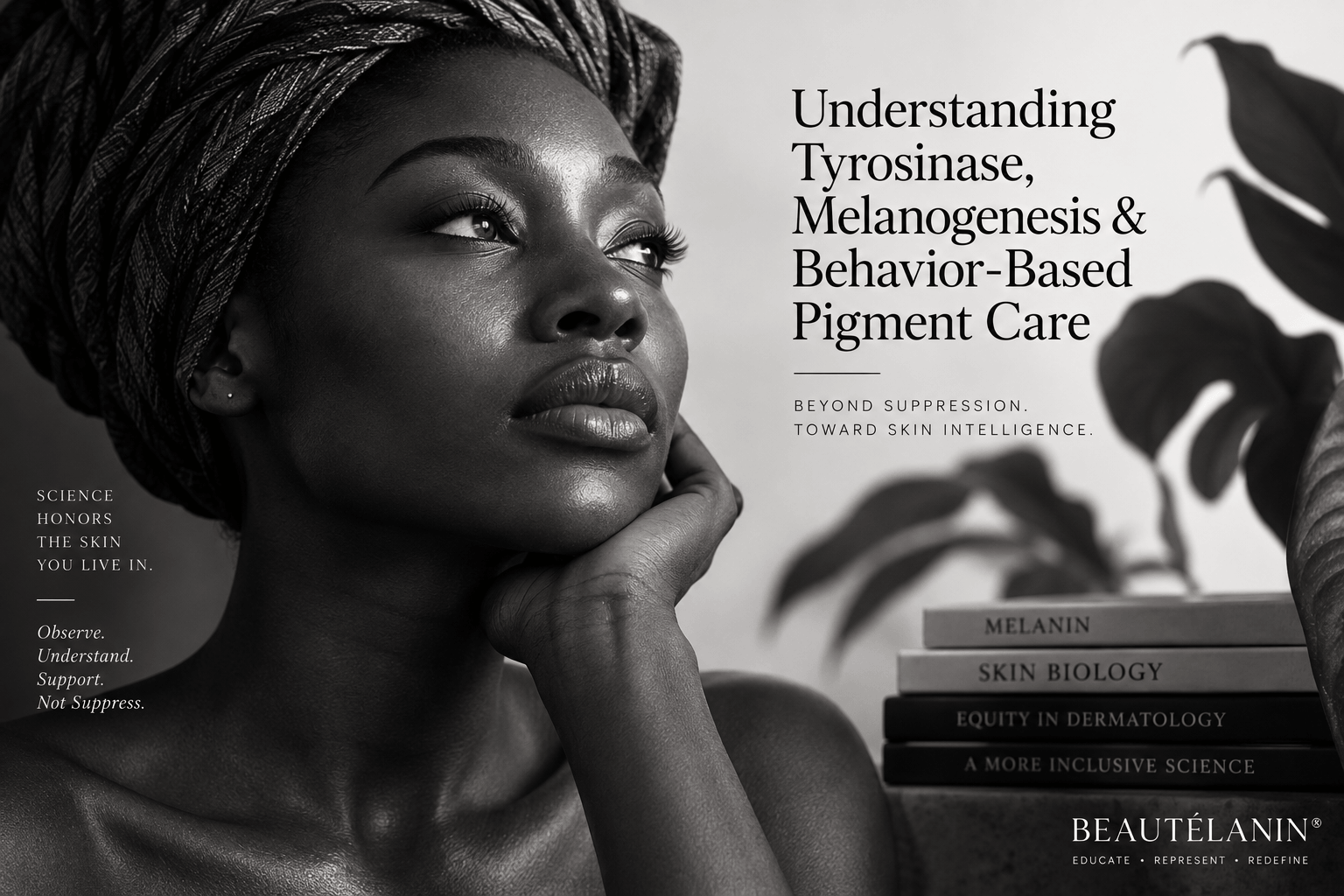
Understanding Tyrosinase, Melanogenesis & Behavior-Based Pigment Care
Tyrosinase is often discussed as something to inhibit, but melanogenesis is not simply a pigment problem waiting to be corrected. Explore the biology of melanin production, the role of tyrosinase, and why Beautélanin® approaches pigment through skin behavior, inflammation, barrier function, environmental exposure, and Pigment Memory, not suppression alone.
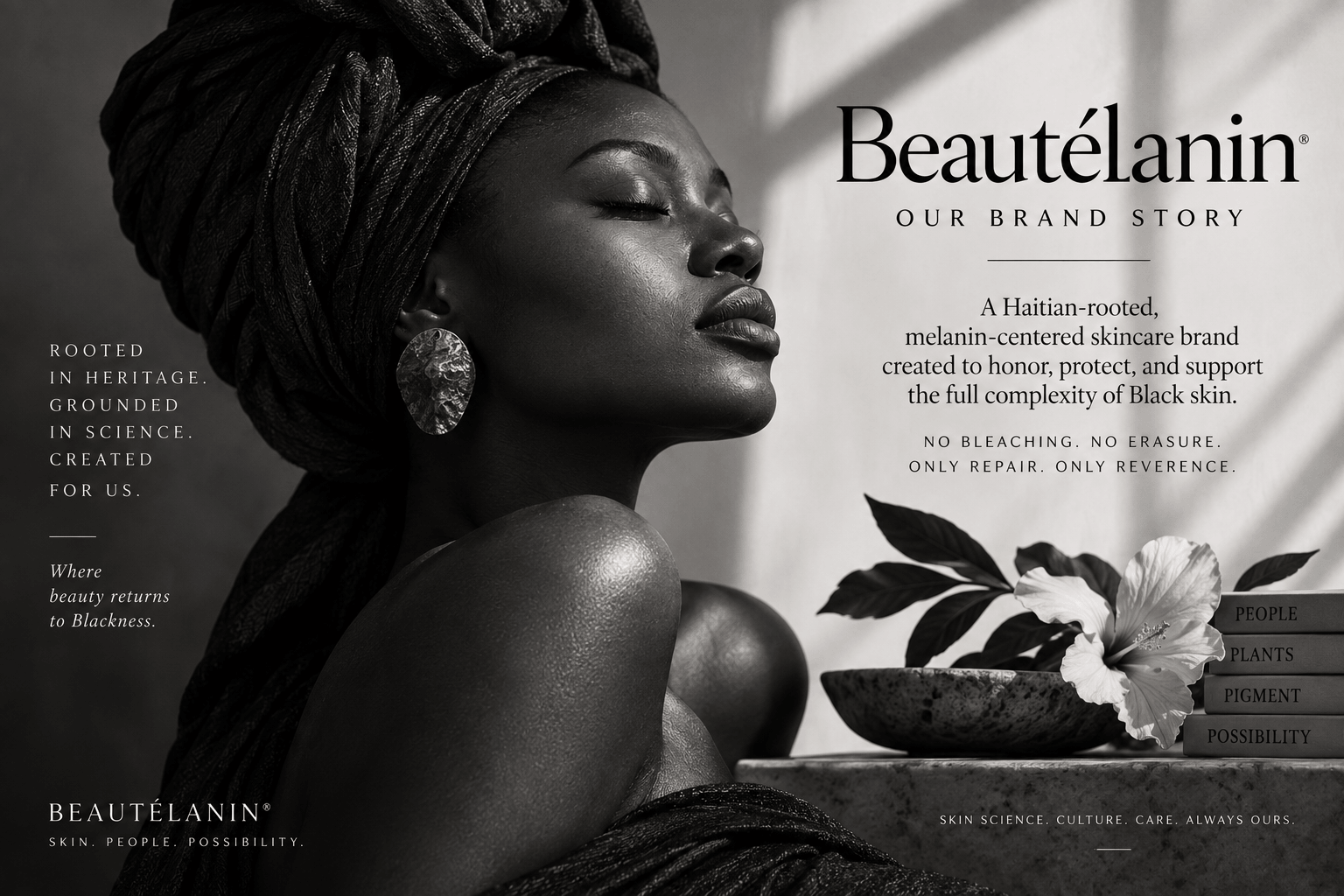
Beautélanin® — Our Brand Story
Beautélanin® was born from a simple but necessary question: what would skincare look like if Black skin were not treated as an exception, a complication, or something requiring correction? Rooted in Haitian heritage and grounded in skin science, our story is one of observation, repair, representation, and reverence, creating a melanin-centered approach where Black skin is understood on its own terms.

A Behavior-Based Perspective
For too long, pigmentation has been treated as something to classify before it is understood. We describe its color, measure its depth, and search for ways to fade it, often overlooking the biological events that gave rise to it in the first place. The MRBUP® Behavior Assessment Framework offers a different perspective, one that views pigment as evidence of the skin's behavior rather than merely its appearance. By examining melanin density, inflammatory response, barrier resilience, ultraviolet legacy, and pigment memory together, practitioners can begin interpreting what the skin is communicating instead of focusing solely on what it reveals.

Glycation Is Not a Moral Failure
Has glycation become another way to shame people for aging? This article explores why reducing skin aging to "too much sugar" oversimplifies a complex biological process. Through the MRBUP® Framework, we examine glycation alongside inflammation, barrier health, ultraviolet exposure, stress physiology, and the social determinants of health, arguing that ethical skincare begins with understanding skin behavior, not assigning blame.
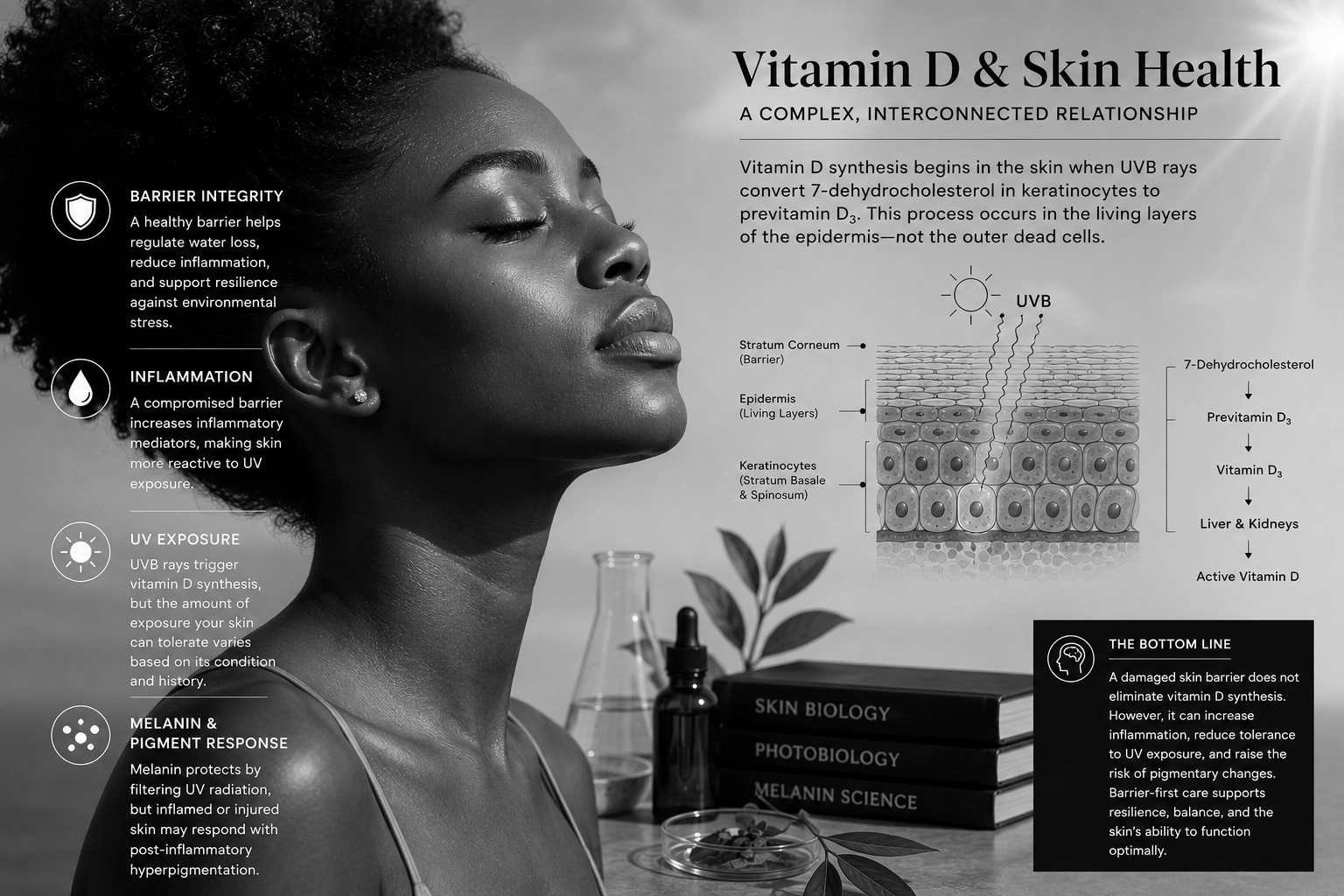
Viewing Vitamin D Through the MRBUP® Framework
A compromised skin barrier does not stop vitamin D synthesis, but it can change how the skin tolerates UV exposure, regulates inflammation, and responds to environmental stress. Explore the science behind vitamin D production, barrier function, keratinocyte biology, and melanin-rich skin through Beautélanin®'s barrier-first philosophy.
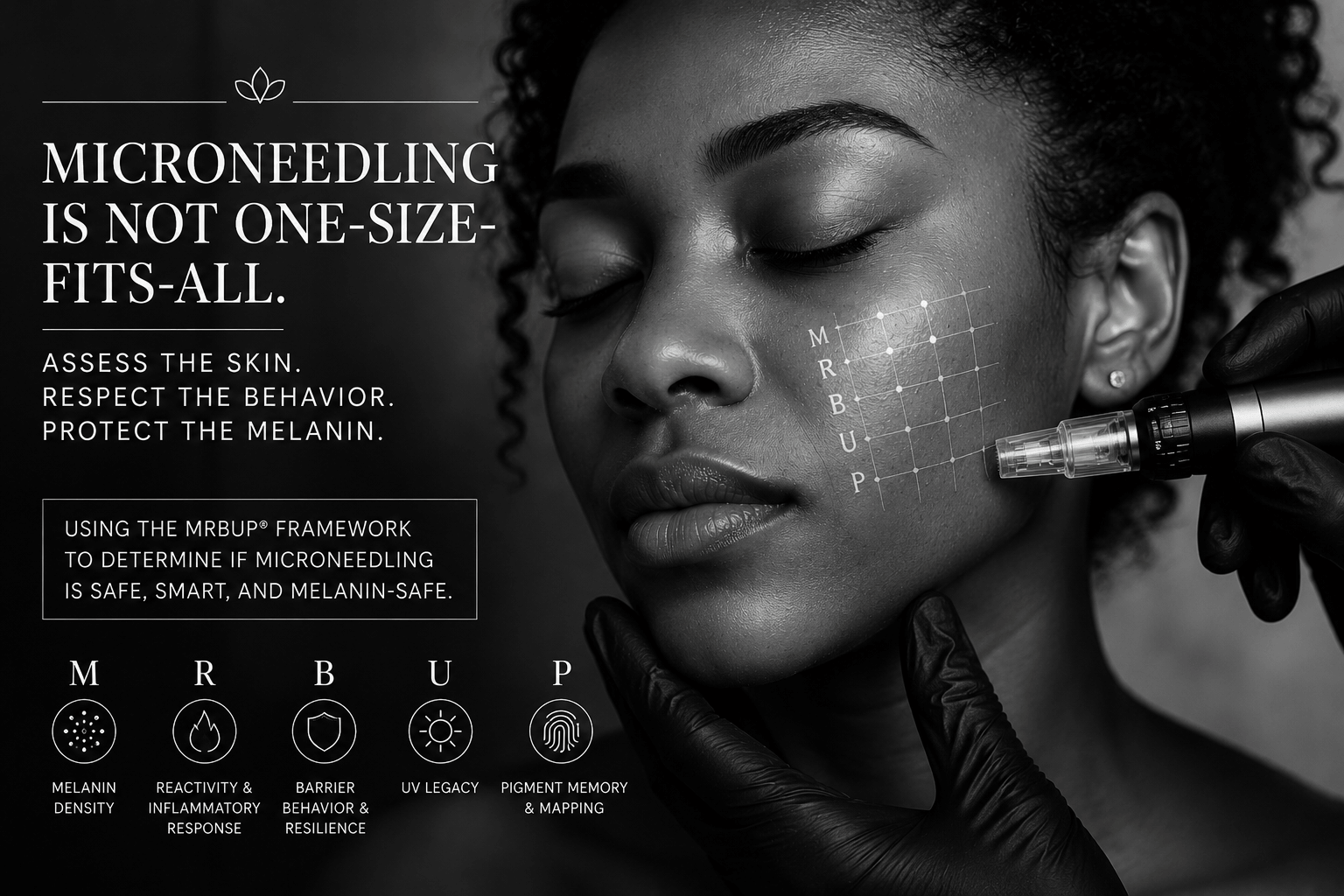
Should Every Client with Melanin-Rich Skin Receive Microneedling?
Microneedling has become one of the most promoted procedures in aesthetics, but not every skin is an appropriate candidate simply because a device is available. Before creating controlled injury, practitioners should first understand how the skin behaves. Using the MRBUP® Framework, this article explores why melanin density alone should never determine treatment decisions and how barrier resilience, inflammatory response, UV history, and pigment memory provide a more thoughtful approach to assessing whether microneedling is appropriate for melanin-rich skin.
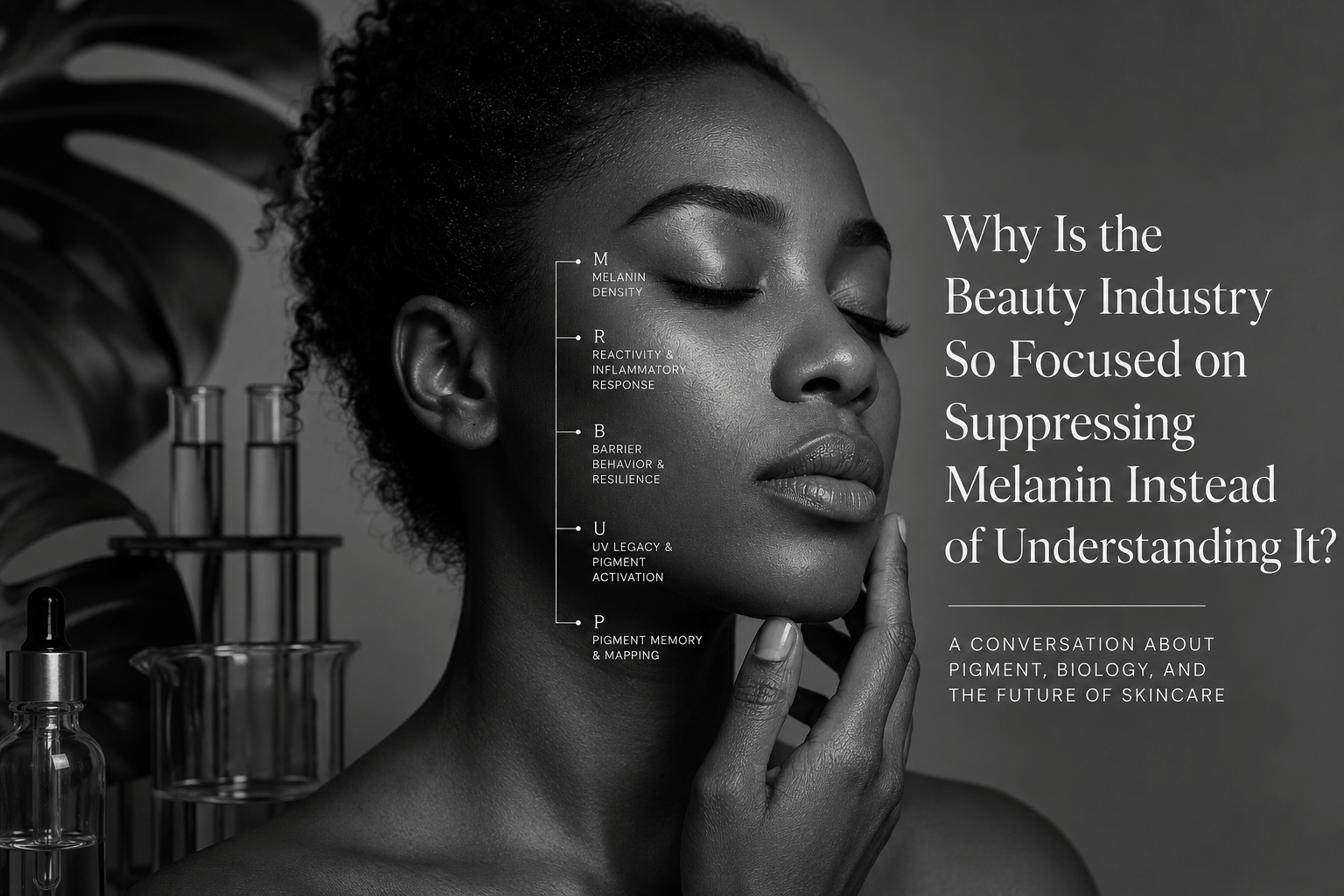
Why Do Melanin Suppressants Exist, But Not Melanin Supporters?
For decades, skincare has focused on reducing pigment rather than understanding why the skin produced it. This article explores the biology of melanocytes, the protective role of melanin, and why the future of melanin-rich skincare may lie in supporting healthy skin behavior instead of simply suppressing pigmentation.
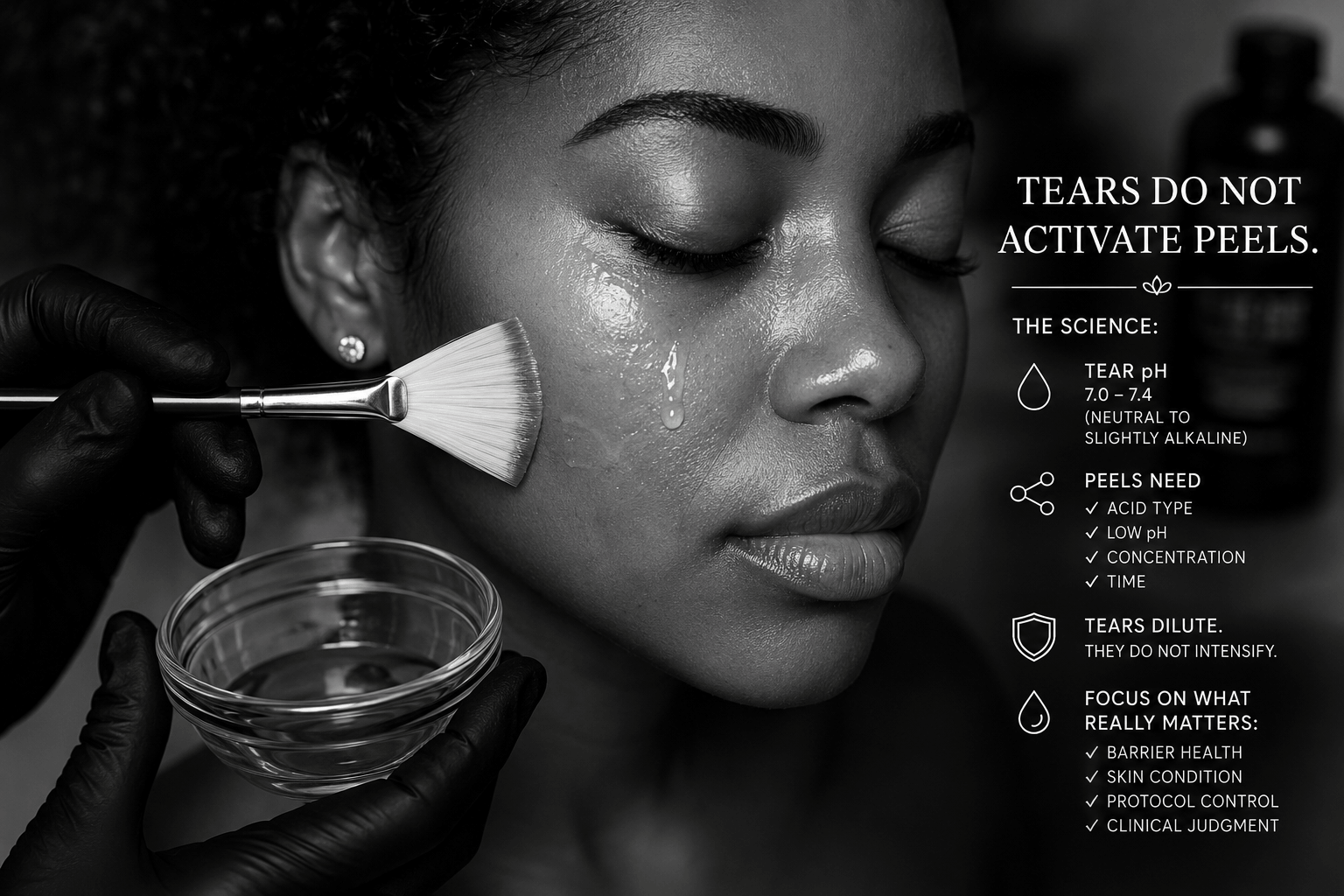
Do Tears Activate a Chemical Peel?
Can tears really activate a chemical peel? It's one of the most common myths taught in esthetics—but science tells a different story. Discover why tears don't make chemical peels stronger, what actually influences peel penetration, and why barrier health—not folklore—should guide safe chemical exfoliation, especially for melanin-rich skin.

The Botanicals That Remember
Some botanicals nourish more than the skin—they preserve history, culture, and memory. Discover the stories behind vetiver, moringa, turmeric, and castor, and explore how these time-honored plants continue to bridge ancestral wisdom with modern skin science through the Beautélanin® philosophy.

A Lesson in What Clients Don't Tell You
The most important information a client shares isn't always written on an intake form. Sometimes it emerges through conversation, trust, and careful observation. This article explores why successful skin consultations go beyond checklists, revealing how lifestyle, stress, habits, and unspoken concerns often shape the skin as much as any product or treatment.
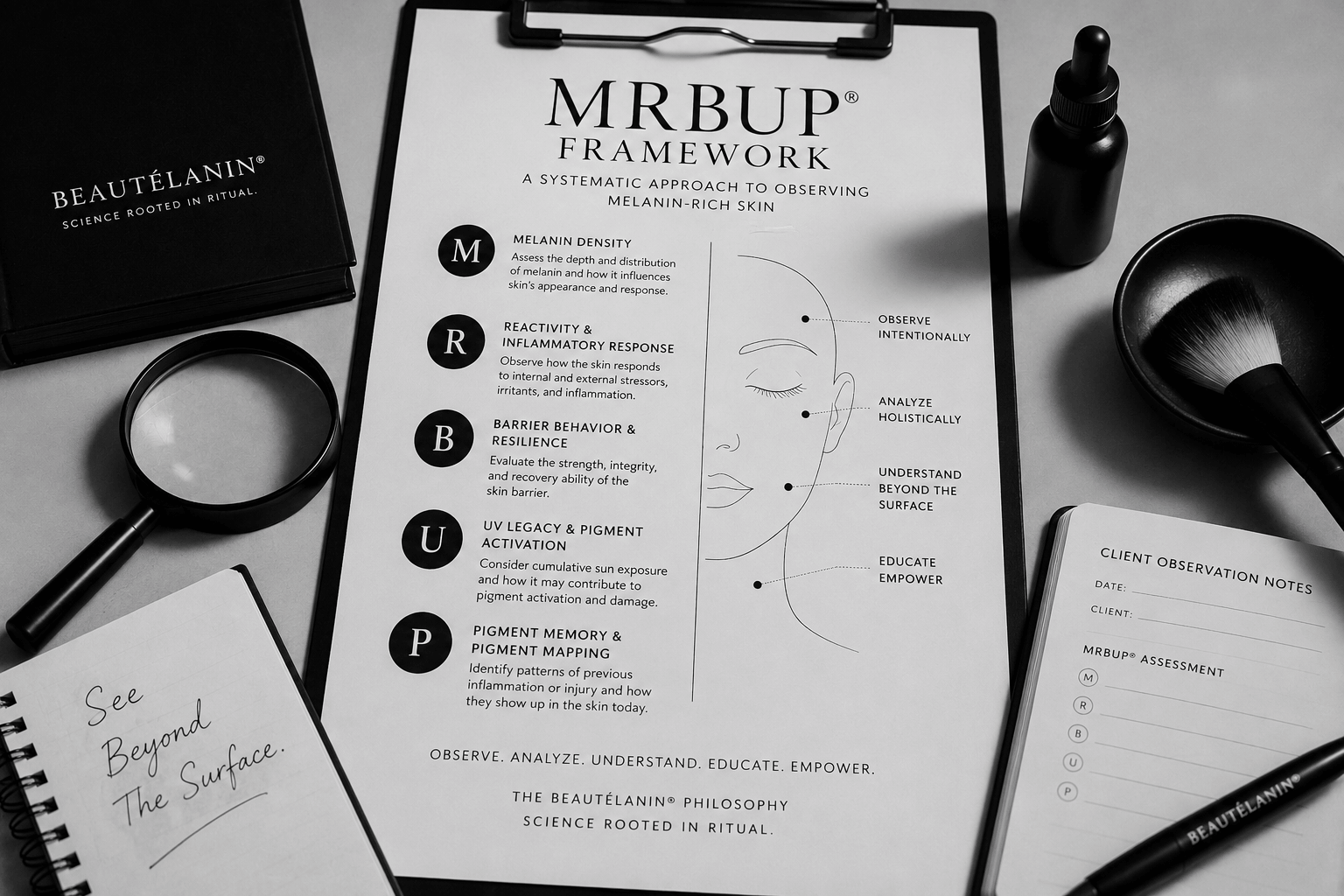
From Awareness to Action: Why We Developed the MRBUP® Framework
The MRBUP® Framework was developed to shift practitioners from assumption to observation. Explore how this federally registered educational framework helps estheticians evaluate melanin-rich skin through five interconnected domains while promoting thoughtful clinical awareness, documentation, and referral when appropriate.
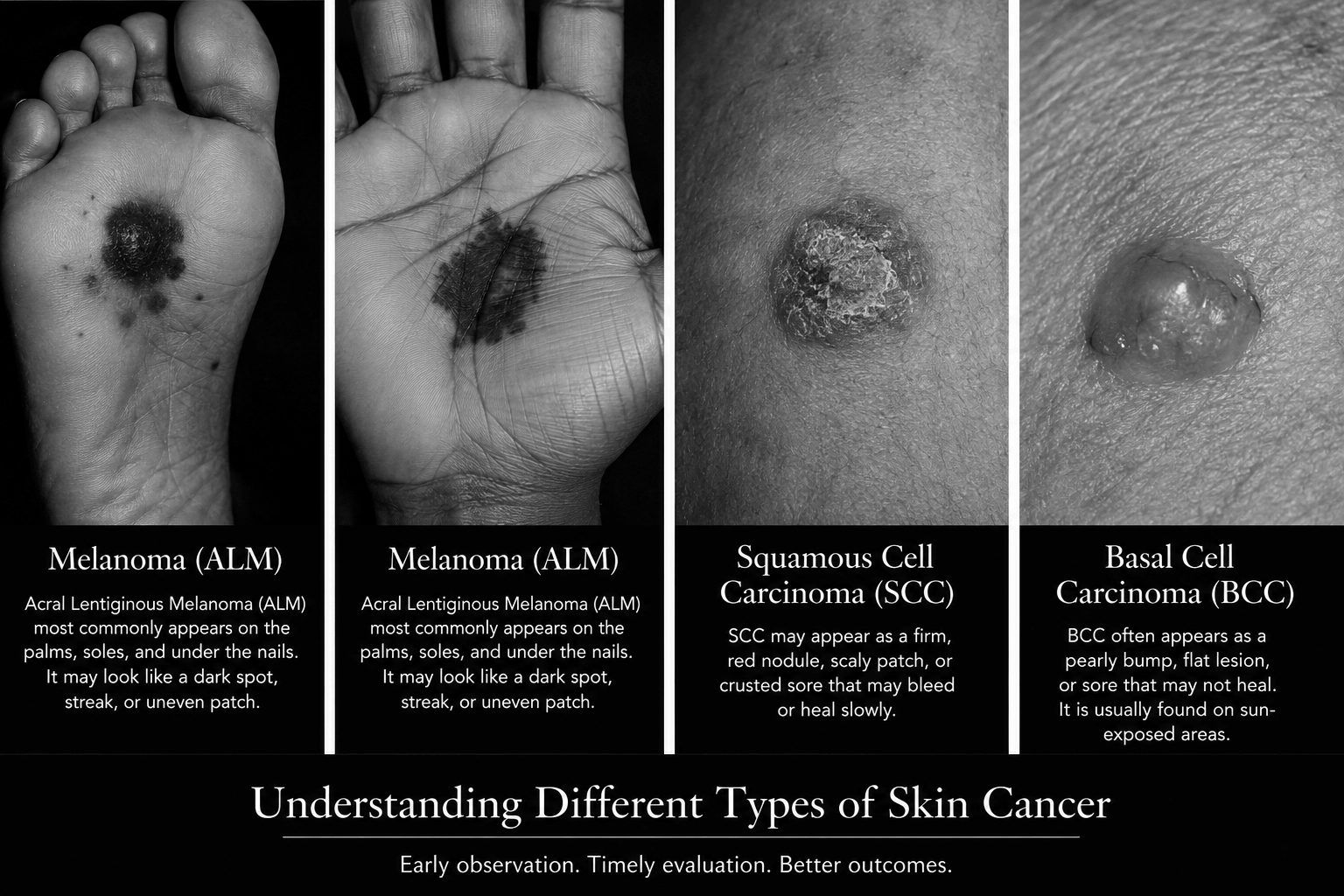
Skin Cancer, Melanin, and the Cost of Being Overlooked
Skin cancer is often perceived as a disease that primarily affects lighter skin, but the reality is far more complex. Explore why melanoma is often more deadly in Black patients, how educational disparities influence diagnosis, and why thoughtful observation—not assumptions—is essential to improving outcomes for melanin-rich skin.

Beyond the State Board: Why Esthetics Education Must Go Further
Passing the state board is only the beginning. This essay explores why true excellence in esthetics requires critical thinking, ethical practice, cultural competency, and a deeper understanding of melanin-rich skin beyond standardized curricula.
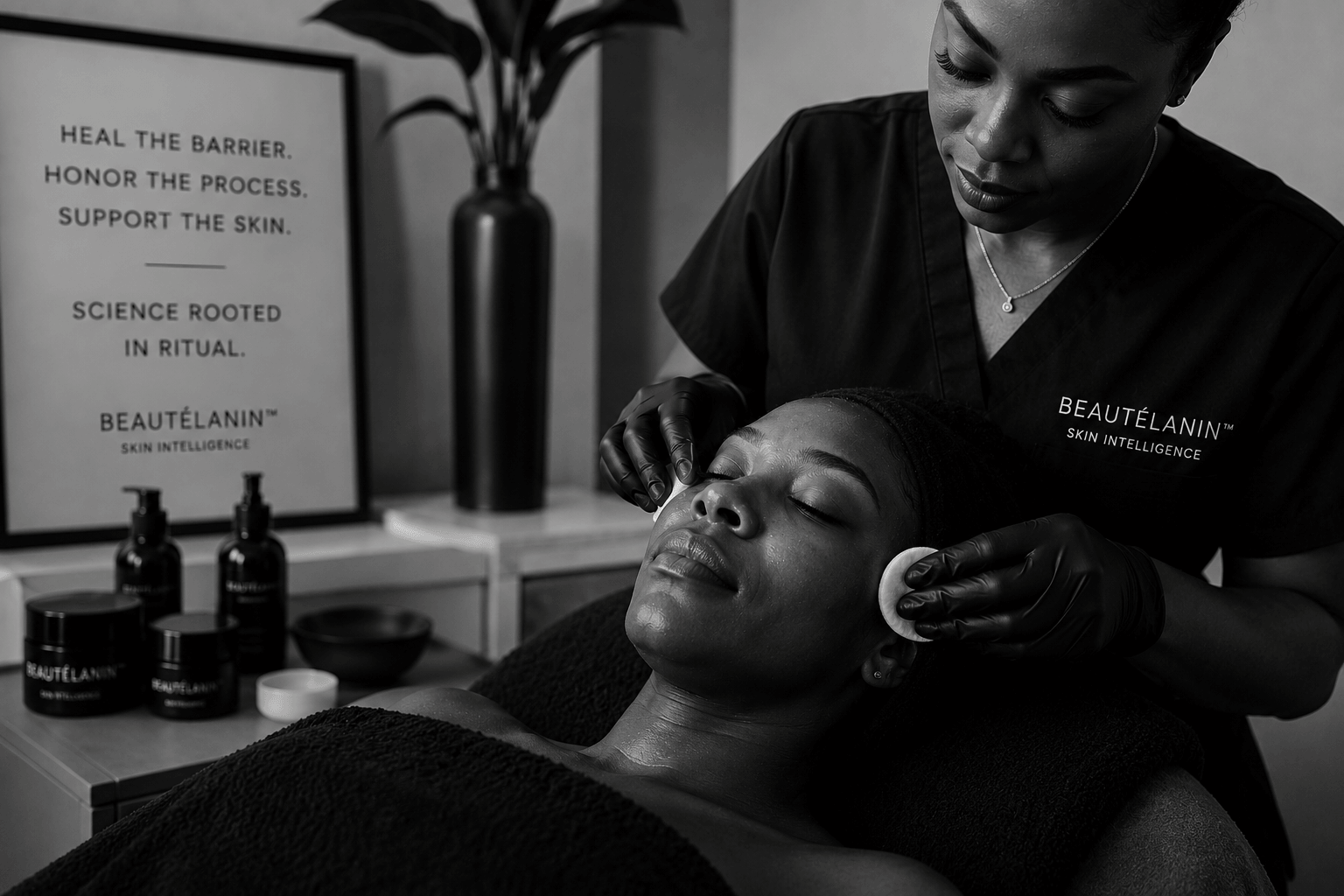
Beyond the Two-Week Rule: Rethinking Facials After Botox Through a Barrier-First Lens
Two weeks after Botox is often considered an appropriate time for a gentle facial—but healing is not measured by the calendar alone. Every client's skin recovers differently, and thoughtful assessment should always guide treatment decisions. Discover why a barrier-first approach places observation, restoration, and individualized care above arbitrary timelines.
I think this version is much more "Beautélanin™." It doesn't simply answer when someone can receive a facial after Botox—it explains why individualized assessment matters, which reinforces your philosophy of observation, barrier health, and melanin-centered care.
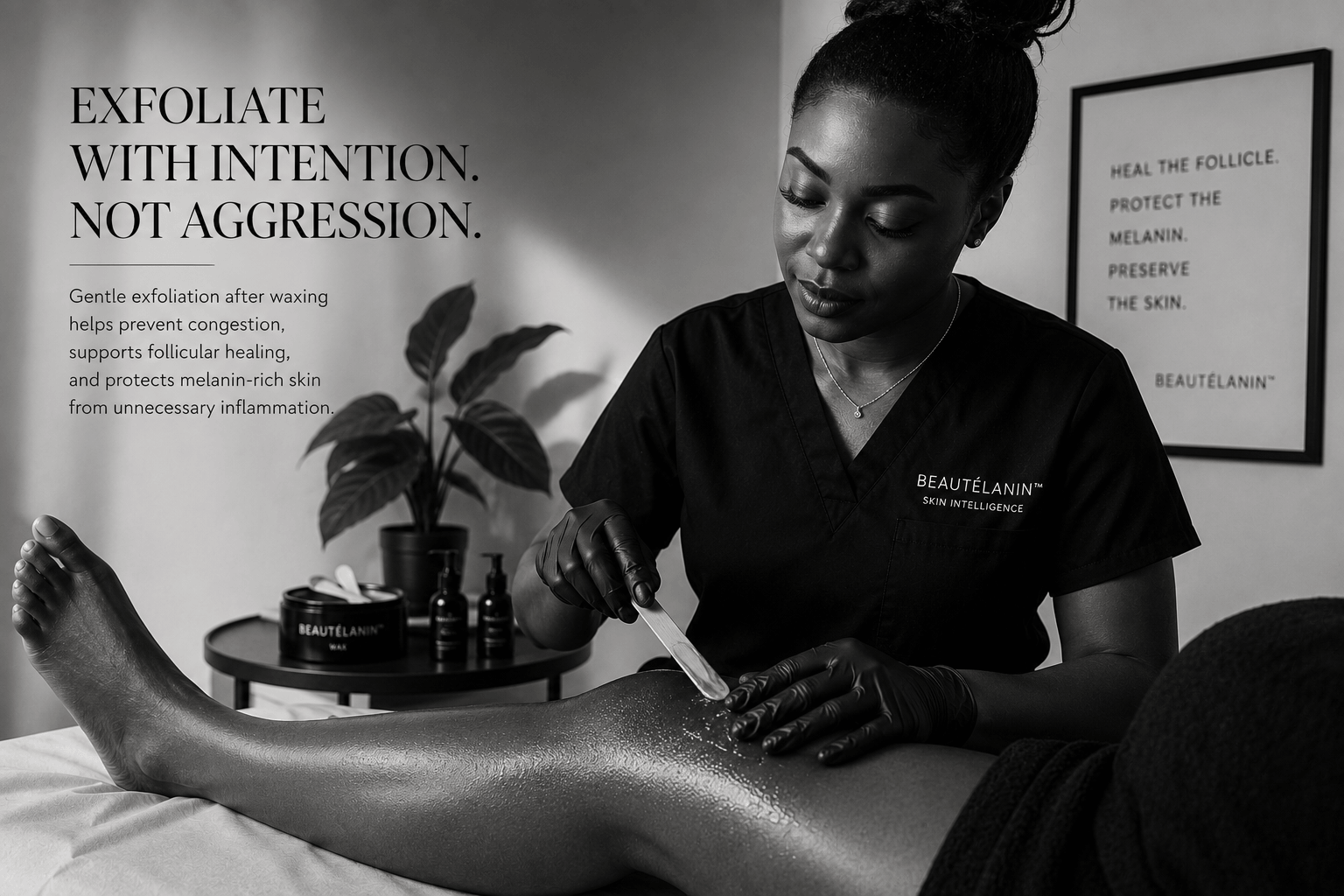
Why Exfoliate After Waxing?
Many people think exfoliation after waxing is about making the skin smoother. In reality, its primary purpose is to support follicular healing and reduce the risk of ingrown hairs, congestion, and post-inflammatory hyperpigmentation. For melanin-rich skin, timing matters. Exfoliating too soon can disrupt the skin barrier and trigger unnecessary inflammation, while gentle exfoliation introduced at the right time can help support healthy regrowth and recovery. Understanding the difference between correction and support is essential to melanin-safe waxing care.
The skin is not a flaw to be corrected. It is a system to be understood. BEAUTÉLANI
Stay in the Conversation
New articles on melanin-rich skin science, ingredients, and education — delivered to your inbox.