
Beyond the Two-Week Rule: Rethinking Facials After Botox Through a Barrier-First Lens
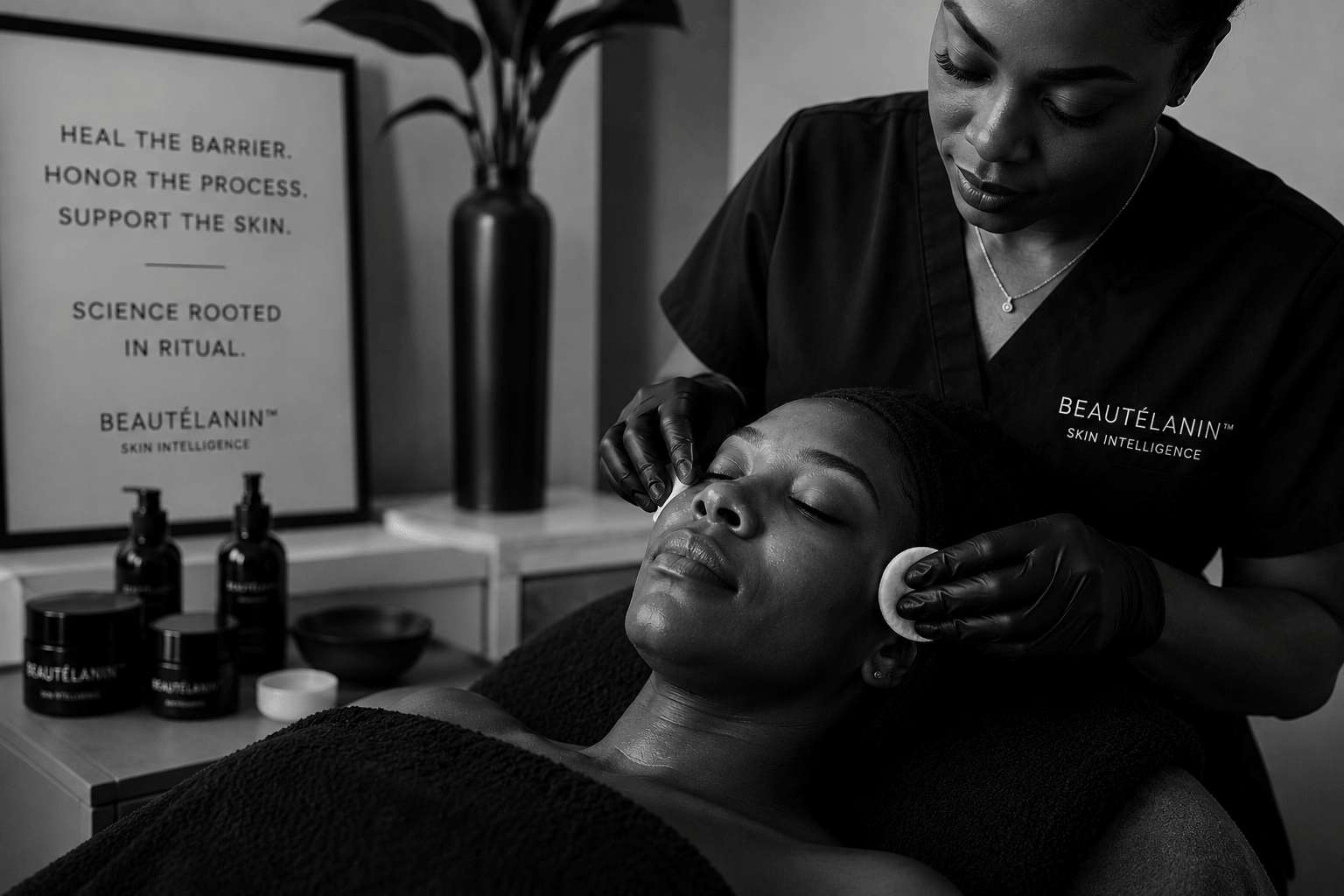
One of the most common questions clients ask after receiving Botox is, “When can I get a facial again?”
The answer most professionals provide is simple: wait about two weeks.
In many cases, this is appropriate. By approximately fourteen days, the neurotoxin has generally reached its intended effect, injection sites have healed, and any bruising or tenderness has typically resolved. (Staff, 2024) At this stage, a gentle facial may be considered appropriate for many clients. However, it is important to recognize that some individuals may need longer to fully recover or may require additional precautions if complicating factors are present. This underscores the need for individualized assessment before resuming treatment.
But at Beautélanin™, we believe the conversation should not end with a calendar.
It should begin with the skin.
Healing Is Not Measured by Time Alone
While waiting two weeks is a useful general guideline, healing is not the same for everyone. The skin does not recover according to a universal schedule. Age, medications, immune function, lifestyle, previous procedures, barrier health, and individual inflammatory responses all influence recovery. (Goodman et al., 2020, pp. 217-225)
A client may reach the fourteen-day mark while still experiencing subtle tenderness, lingering bruising, localized swelling, or increased skin sensitivity. Another client may appear completely healed much sooner. Neither timeline is inherently right or wrong.
This is why treatment decisions should never rely solely on the calendar.
They should rely on observation.
A Barrier-First Consultation
At Beautélanin™, we begin every post-Botox treatment by evaluating the skin's current condition rather than assuming healing has occurred. Our barrier-first evaluation includes a structured set of steps to ensure each client's skin is truly ready for the next treatment. This process involves:
1. Visually inspect the skin for signs of lingering bruising, redness, or swelling around injection sites.
2. Gently palpating the treated areas to assess any residual tenderness, firmness, or discomfort that could indicate incomplete healing.
3. Checking for evidence of barrier compromise, such as dryness, flakiness, or unusual sensitivity, which may require adjusting the treatment plan.
4. Discussing any new or ongoing symptoms the client may have noticed since their Botox procedure, including unexpected reactions.
5. Reviewing any updates, restrictions, or specific recommendations from the client's medical provider.
By following these steps, we can confidently determine when the skin is ready for a facial and tailor our approach to each individual's unique needs.
Before any facial, we consider questions such as:
Has all bruising resolved?
Is there any remaining tenderness?
Has localized swelling completely subsided?
Does the skin demonstrate signs of barrier compromise?
Has the client experienced any unexpected reactions or complications?
Has the treating medical provider recommended any additional precautions?
These observations often provide more meaningful information than simply counting the number of days since the procedure.
Gentle Does Not Mean Ineffective
Once healing is complete, a basic facial can become an excellent way to support skin health.
The focus, however, should not be aggressive correction.
It should be restoration.
A post-Botox facial may include gentle cleansing, hydration, barrier-supportive ingredients, calming massage that avoids excessive tissue manipulation, soothing masks, LED therapy when appropriate, and individualized home-care recommendations. However, certain ingredients and modalities should always be avoided until the skin is fully healed. Estheticians should refrain from using strong exfoliants such as alpha-hydroxy acids (AHAs), beta-hydroxy acids (BHAs), scrubs, or enzymes, as well as retinoids or retinol. Avoid chemical peels, microdermabrasion, microneedling, or any procedure that involves heat, suction, or vigorous massage over the injection sites. Fragranced or sensitizing products, as well as harsh physical exfoliants, should also be omitted to prevent irritation and barrier compromise. (Pollock, 2026) By steering clear of these potentially disruptive ingredients and techniques, professionals can help ensure the safest, most supportive environment for post-Botox skin recovery.
The objective is to support the skin’s natural recovery while maintaining barrier integrity.
Healthy skin benefits from nourishment—not unnecessary stimulation.
When Additional Caution Is Needed
Not every post-injectable treatment follows the same considerations.
Clients who have also received dermal fillers may require additional modifications depending on the treatment area, the type of filler used, the provider’s recommendations, and the client’s healing response. (Baranska-Rybak et al., 2024, pp. 1767-1785) For example, if a client has recently had filler injected into the cheeks, we may avoid any facial massage or pressure in that region for several weeks, focusing instead on gentle cleansing and hydration. If the fillers are placed near the mouth or lips, even light manipulation in those zones may be postponed until the area is completely healed and stable. In these cases, facials can be adjusted by omitting techniques that could disrupt the filler or increase swelling, and by selecting products that calm and strengthen the skin barrier.
Likewise, advanced modalities that involve significant tissue manipulation—including vigorous massage, vacuum suction, or strong lifting techniques—should be introduced thoughtfully and only when appropriate for the individual’s stage of healing. (Facial After Botox: How Long to Wait & Which Treatments Are Safe, n.d.)
Every treatment should respect both the procedure performed and the skin's healing biology.
The Beautélanin™ Perspective
Much of modern esthetics asks, “When can we resume treatment?”
At Beautélanin™, we ask a different question: “What does the skin need today?”
Sometimes the answer is hydration. Sometimes it is barrier repair. And sometimes it is simply more time. This shift in perspective changes everything. Rather than viewing the two-week mark as a finish line, we see it as the beginning of a new assessment. Because skin care is not about following timelines. It is about responding to biology.
Final Reflection
General guidelines are valuable, but they should never replace thoughtful clinical judgment.
For many clients, a gentle facial approximately two weeks after Botox is both reasonable and appropriate, provided healing has occurred, and no complications remain. Yet every treatment should be individualized, guided by careful observation, open communication, and respect for the skin’s natural recovery process.
Whenever possible, we recommend that estheticians communicate directly with the client’s medical provider before resuming post-Botox treatments. Simple consultations—such as confirming the provider’s guidance, discussing any client-specific concerns, or clarifying recommended precautions—help ensure a safe, collaborative approach and support the best outcome for each client.
At Beautélanin™, we believe the healthiest skin is never rushed. It is supported. Because healing deserves the same attention as treatment.
References
Staff, M. C. (2024). Botox injections - Mayo Clinic. Mayo Clinic. https://www.mayoclinic.org/tests-procedures/botox/about/pac-20384658
Goodman, G. J., Liew, S., Callan, P. & Hart, S. (2020). Facial aesthetic injections in clinical practice: Pretreatment and posttreatment consensus recommendations to minimise adverse outcomes. Australasian Journal of Dermatology 61(3), pp. 217-225. https://doi.org/10.1111/ajd.13273
Pollock, D. M. (March 29, 2026). Botox aftercare: What experts recommend following your treatment. Medical News Today. https://www.medicalnewstoday.com/articles/drugs-botox-aftercare
Baranska-Rybak, W., Lajo-Plaza, J. V., Walker, L. & Alizadeh, N. (2024). Late-Onset Reactions after Hyaluronic Acid Dermal Fillers: A Consensus Recommendation on Etiology, Prevention and Management. Dermatology and Therapy 14(7), pp. 1767-1785. https://doi.org/10.1007/s13555-024-01202-3
(n.d.). Facial After Botox: How Long to Wait & Which Treatments Are Safe. UseBotox. https://usebotox.com/articles/facial-after-botox
Beautélanin™ articles are for education only and do not replace medical advice.
