


Redefining Skin Typing
for the Melanin-Rich
majority
The MélanoMatrix-D™ Skin Profile
(Also known as the M-R-B-U-P™ Profile)
Powered by NoirScience™
The MélanoMatrix-D™ is our proprietary five-axis system for evaluating melanin-rich skin. Each axis reflects a vital dimension of skin function, trauma memory, and ancestral adaptation.
Why MélanoMatrix-D™ Changes The Game
For too long, melanin-rich skin has been marginalized by outdated skin-typing systems. MélanoMatrix-D™ offers an approach rooted in science and cultural accuracy, because respect and results shouldn’t be mutually exclusive.
The Foundational Problem
The dominant diagnostic tools in esthetics, most notably the Fitzpatrick scale, were created to answer one specific question:
How does skin respond to ultraviolet exposure?
Over time, this narrow metric became a stand-in for comprehensive skin assessment, despite never being designed for that purpose.
As a result:
Skin with vastly different histories receives identical treatment.
Barrier damage is mistaken for “sensitivity.”
Dehydration is mislabeled as dryness.
Inflammation is treated reactively instead of preventatively.
Hyperpigmentation is framed as inevitable rather than avoidable.
These outcomes are not accidents.
They are the predictable consequences of an incomplete diagnostic model.
The M-R-B-U-P™ Response
M-R-B-U-P™ was created to answer the questions existing systems cannot:
How does this skin behave under stress?
How does it remember trauma?
How does it repair itself?
What makes this skin vulnerable, and what makes it resilient?
M-R-B-U-P™ is not a color scale.
It is a functional intelligence framework.
The Five Axes of Skin Behavior
MRBUP™ evaluates skin across five interdependent dimensions:
M — Melanin Density
Not as a cosmetic trait, but as a biologic amplifier of inflammation, pigment response, and UV adaptation.R — Reactivity & Inflammatory Response
How quickly and intensely skin reacts to internal and external stimuli, including products, procedures, and stress.B — Barrier Behavior & Resilience
The integrity and resilience of the stratum corneum and lipid matrix; not assumed but assessed.U — UV Legacy/Pigment Activation
Cumulative sun exposure history, protection habits, and geographic adaptation.P — Pigment Memory & Pattern Mapping
The skin’s tendency to retain, recall, and exaggerate pigment after injury or inflammation.
Together, these axes describe how skin functions, not how it looks.
Why This Matters Clinically
Skin does not fail randomly.
It responds logically to what it has experienced.
When practitioners rely on incomplete models:
overtreatment becomes normalized
post-inflammatory hyperpigmentation becomes common
“Sensitive skin” becomes a catch-all diagnosis
repair is delayed until after damage occurs
M-R-B-U-P™ shifts the standard of care from damage management to damage prevention.
A Framework Built for Reality
M-R-B-U-P™ acknowledges what traditional systems ignore:
Chemical trauma from over-exfoliation.
Mechanical trauma from aggressive techniques.
Thermal trauma from steam and heat.
Hormonal disruption from product ingredients
Cumulative stress from lifestyle and environment.
Cultural and genetic skin behavior differences.
This is not theory.
This is observed skin behavior.
The MRBUP™ Manifesto
Why a New Skin Intelligence Framework Exists
A Statement of Purpose
M-R-B-U-P™ exists because skin has been oversimplified, and the cost of that simplification has been borne disproportionately by melanin-rich skin.
For decades, esthetic education and clinical protocols have relied on frameworks that prioritize appearance over behavior, color over function, and risk avoidance over understanding. These systems were not designed to fail;
they were designed within a narrow context and then applied universally.
M-R-B-U-P™ exists to correct that misalignment.
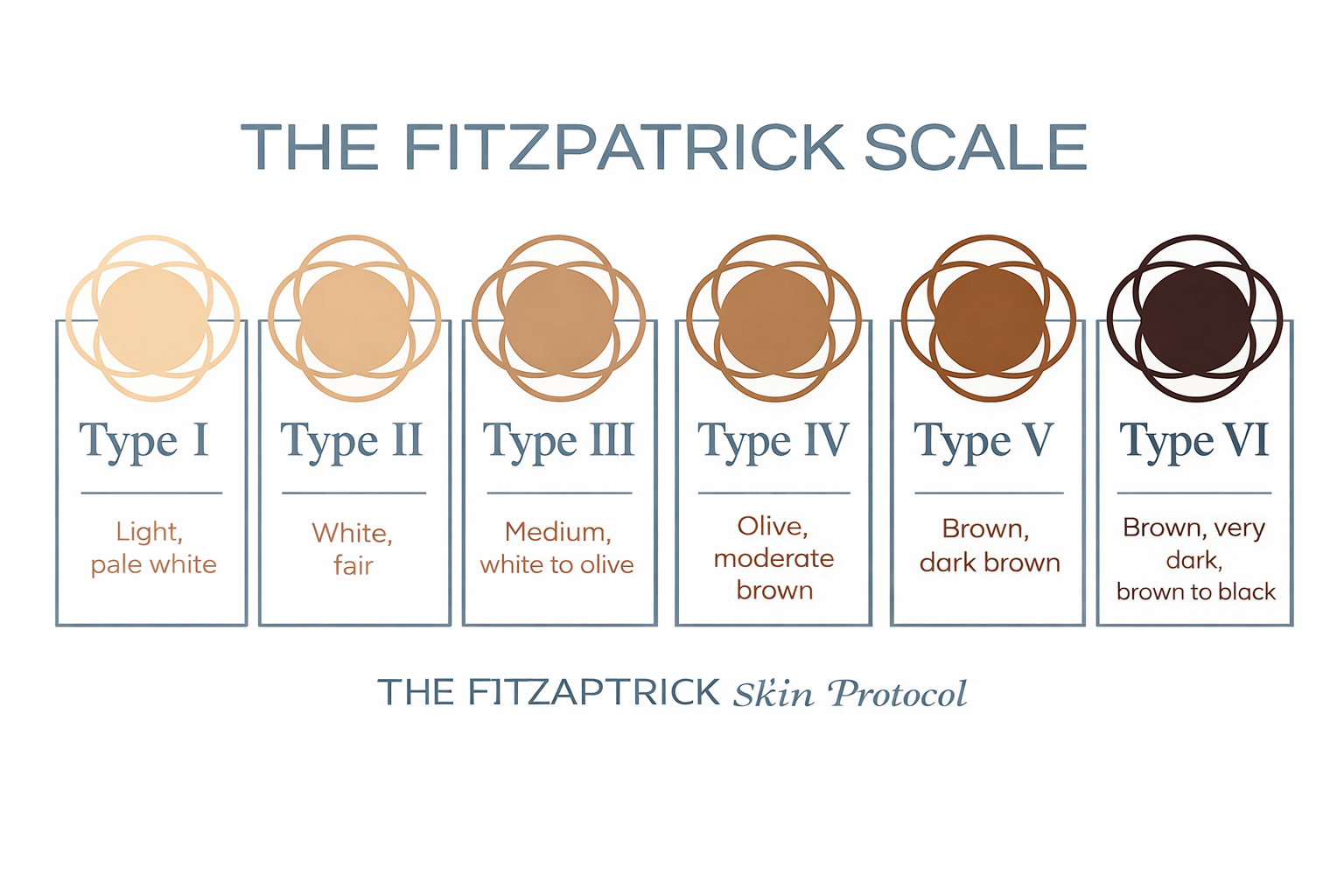
The Fitzpatrick Scale: A Whitewashed Legacy
The Fitzpatrick Scale never told the full story.
Created in the 1970s, the Fitzpatrick Scale was built to measure how light skin burns or tans. It centers whiteness as the standard, treating melanin-rich skin as an afterthought. This reductionist framework erases cultural, biological, and ancestral realities.
What Fitzpatrick ACTUALLY measures
What FitzWhy It Breaks Down for Melanin-Rich Skin
Why It Fails:
1. White Skin as the Default
The scale assumes aging, burning, and tanning patterns of pale skin are the “universal standard,” leaving melanin-rich skin as a vague afterthought. This erases how deeper tones heal, scar, and respond to trauma.
2. No Room for Pigment Memory
Fitzpatrick never accounted for how melanin remembers trauma from hyperpigmentation to keloid scarring. It fails to recognize that darker skin doesn’t just burn; it responds and protects differently.
3. Culturally Tone-Deaf
Sun habits, climate adaptation, and historical narratives of skin care are ignored. Fitzpatrick reduces a global population to a checkbox about how quickly you “tan,” while ignoring the entire science of barrier resilience and inflammation.
The Fitzpatrick Scale was designed to assess:
UV response
Likelihood of burning vs tanning
Erythema (redness) response
It does not measure:
Barrier strength
Inflammatory memory
Pigment response pathways
Trauma history
Product tolerance
Healing behavior
It is most accurate for lighter skin tones where redness and burning are visible markers.
Melanin-rich skin:
May not visibly burn
Often does not show erythema
Responds to injury via pigment, not redness
Stores inflammation as melanin memory
So Fitzpatrick can say:
“Low risk of sunburn”
while the skin still develops:
PIH
Melasma
Delayed inflammation
Barrier collapse from overtreatment
That’s the disconnect to our living experiences.
It assumes white skin is the default, ignoring the unique biology and needs of darker tones.
“Tanning” is not a universal measure of skin health — deeper skin tones react differently to UV exposure, inflammation, and healing.
It disregards pigment memory, post-inflammatory hyperpigmentation, and keloid risk, which are critical for melanin-rich clients.
It offers no insight into barrier resilience, inflammatory response, or cultural sun practice.
Why our MelanoMatrix-D™ (M-R-B-U-P™) Is Clinically Superior
While the Fitzpatrick scale is primarily useful for recommending appropriate levels of sun protection, it does not adequately predict how melanin-rich skin will respond to inflammation, trauma, or treatment intensity. The MRBUP™ framework expands beyond UV response by assessing melanin density, inflammatory behavior, barrier behavior/resilience, UV legacy/pigment activation, and pigment memory and pattern mapping, allowing the practitioner to anticipate skin reactions, prevent overtreatment, and design truly melanin-safe protocols.
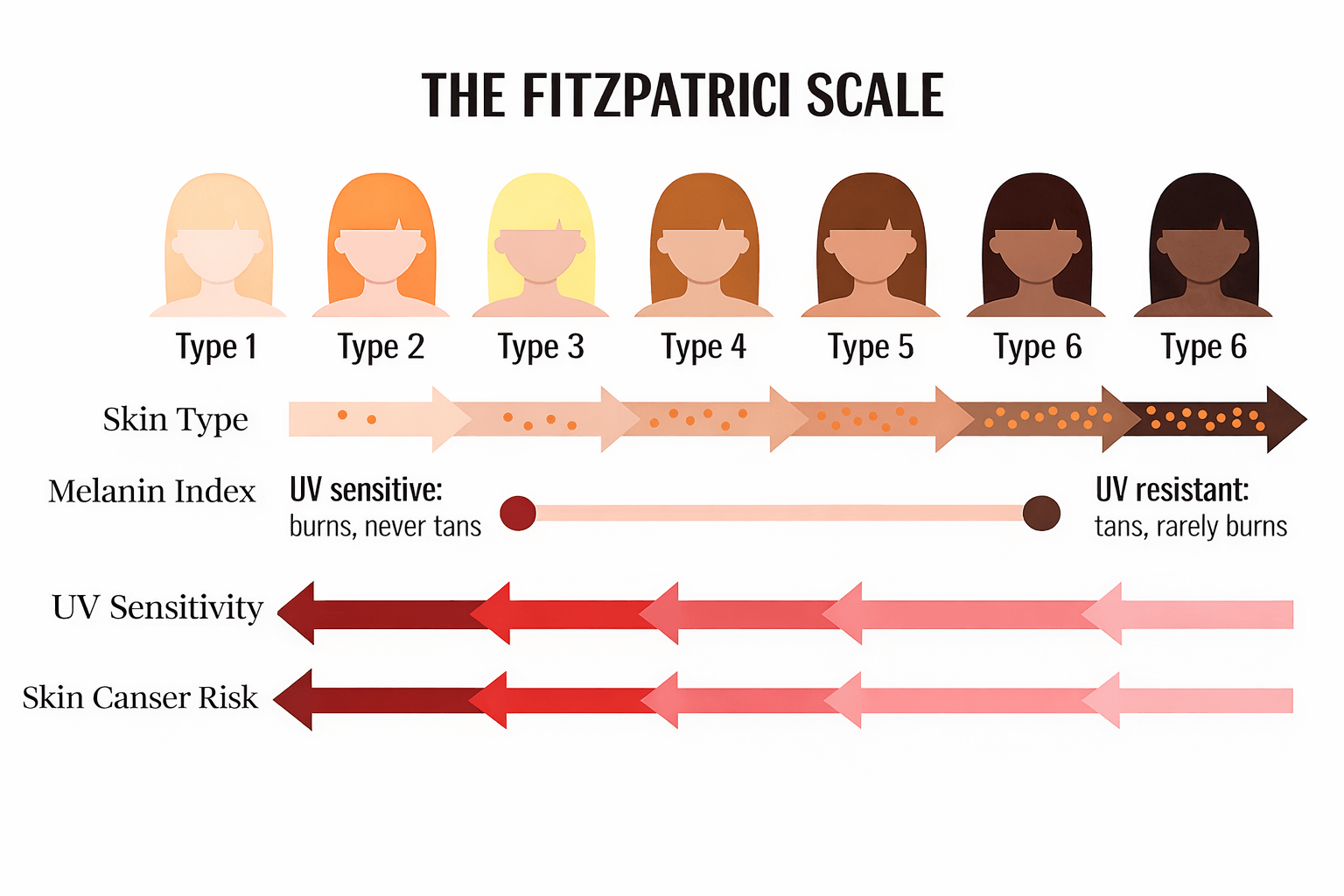
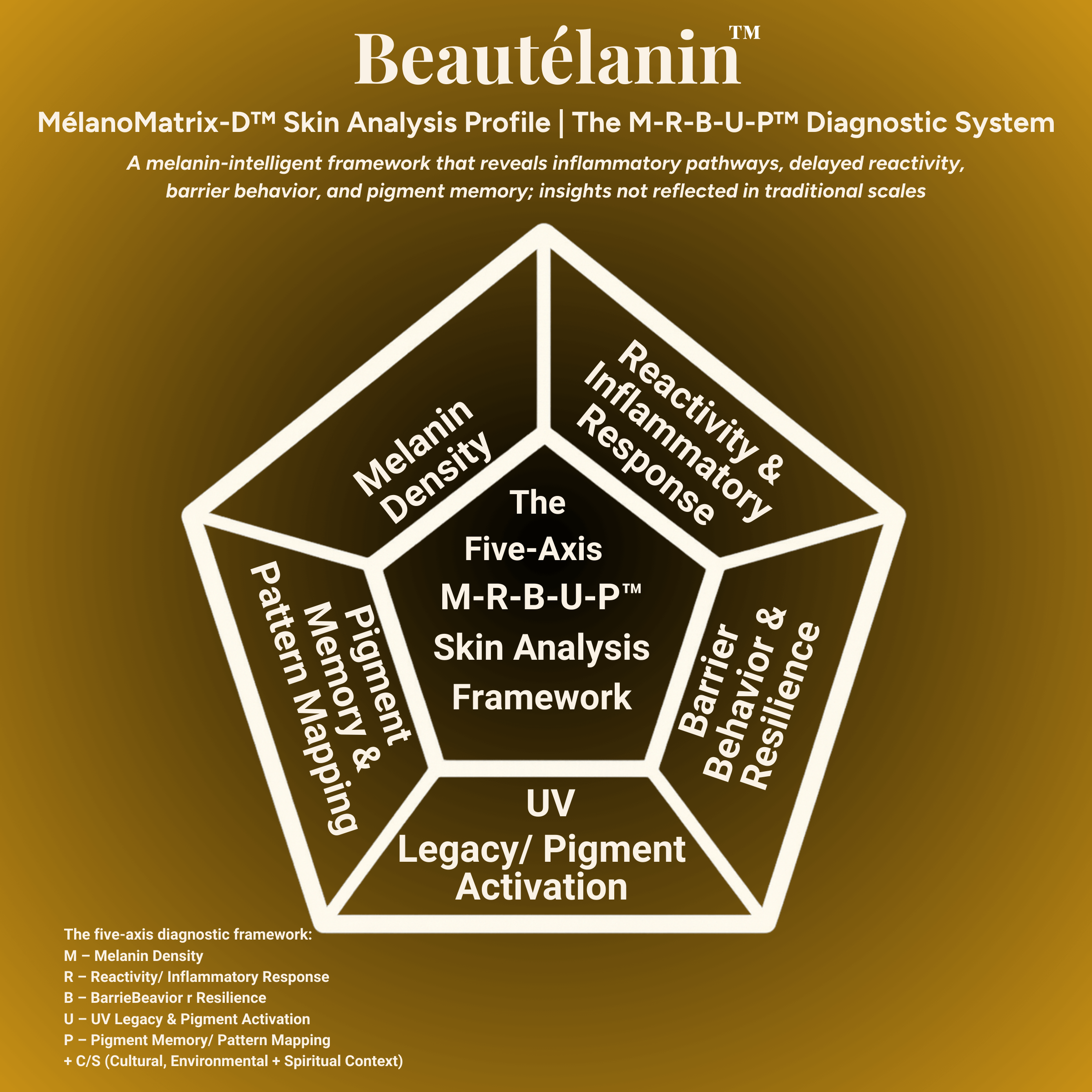
FITZPATRICK SCALE
────────────────────
• Focus: UV exposure
• Measures: burn vs tan
• Input: skin color + sun response
• Output: SPF recommendation
• Limitation: ignores trauma & inflammation
M-R-B-U-P™ FRAMEWORK
────────────────────
M – Melanin density
R – Reactivity & Inflammatory response
B – Barrier Behavior & Resilience
U – UV legacy& Pigment Activation (past exposure & damage)
P – Pigment memory & Pigment Mapping
Input: skin history + behavior
Output: treatment strategy
Sun response is not skin behavior.
Melanin remembers what the sun forgets.
Why MelanoMatrix-D™ Changes the Game
The Fitzpatrick Scale was built on the assumption that white skin is the “default,” leaving melanin-rich skin as an afterthought. We are rewriting that narrative with MelanoMatrix-D™, the first diagnostic tool designed for the global majority — skin that holds memory, resilience, and ancestral wisdom.
What Makes It Revolutionary?
Goes beyond tanning response to measure barrier strength, pigment memory, and inflammatory patterns.
Honors cultural + spiritual context that shape how skin heals, ages, and thrives.
Created for estheticians, educators, and product developers who refuse to erase darker skin from the science of beauty.
Powered by NoirScience™, a framework rooted in biology, heritage, and healing.
Why This Matters in Practice
Fitzpatrick answers:
“How much SPF?”
M-R-B-U-P™ FRAMEWORK answers:
“How will this skin behave if I touch it, treat it, heat it, exfoliate it, or stress it?”
That’s the difference between:
avoiding sunburn
vspreventing pigment trauma

Who Is It For?
This system is ideal for:
Licensed estheticians seeking better treatment matching
Medical professionals treating hyperpigmentation and scarring
Educators replacing outdated curriculum models
Product formulators designing melanin-safe skincare
What Makes the MélanoMatrix-D™ Different?
The MelanoMatrix-D™ is not just about color, it's about biology, behavior, and ancestral context. It evaluates skin using five interlocking dimensions (M-R-B-U-P™):
Melanin Density
Reactivity & Inflammatory Response
Barrier Behavior and Resilience
UV Legacy & Pigment Activation
Pigment Memory & Pattern Mapping
+Cultural, Environment + Spiritual Context (optional)
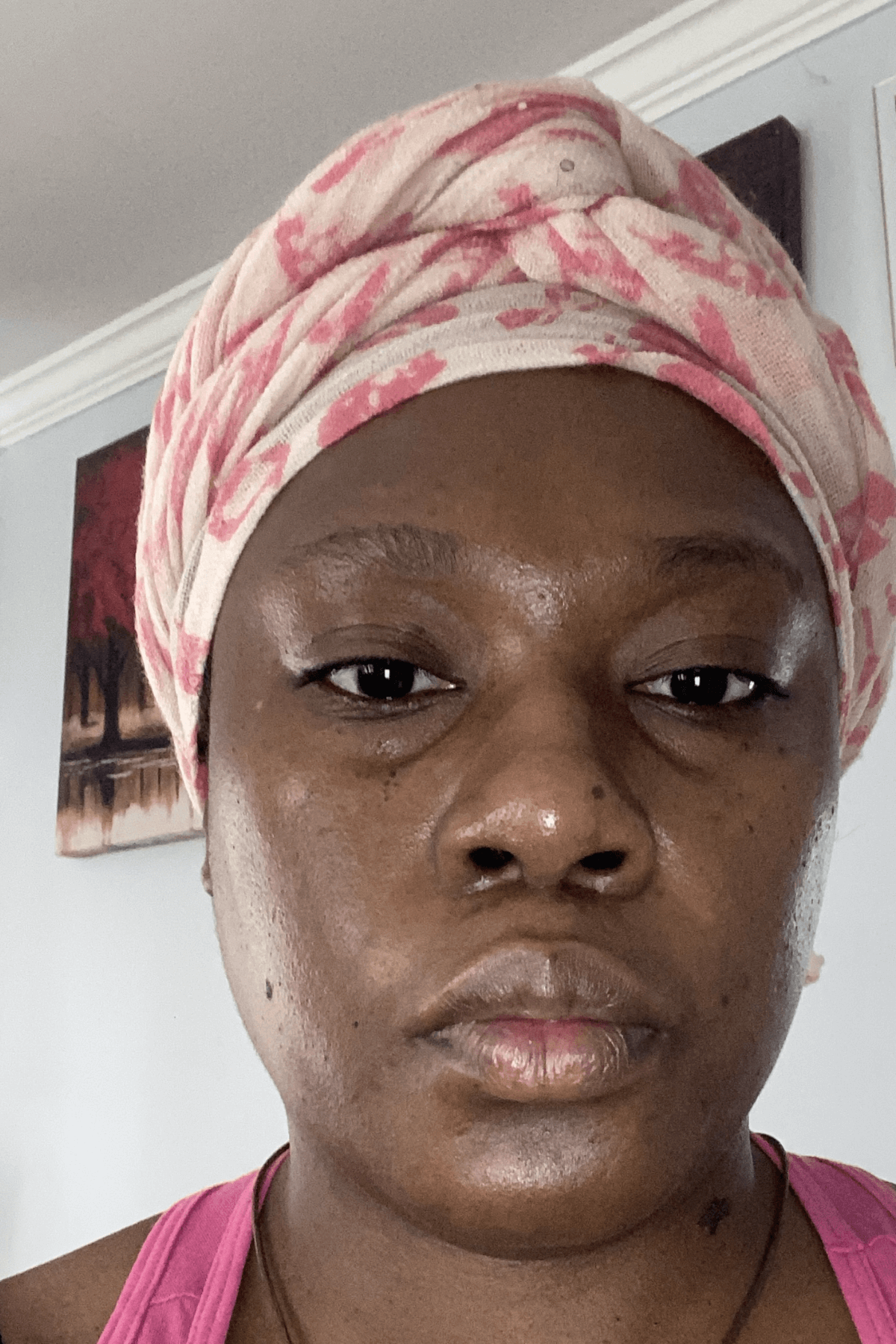
My M-R-B-U-P™ Skin Profile
(Beautélanin™ Melanin Behavior Analysis)
Our diagnostic score & interpretation
M — Melanin Density: HIGH
My answers:
Darkens to sun exposure
Does not tan easily
Uneven tone & lighter patches
Marks linger for months/years
My visible cues:
High eumelanin concentration
Diffuse pigment retention around eyes, mouth, and pre-existing marks
Rapid darkening response in sun.
My Score: 5 / 5 (High Density)
I have true high melanin density: not by color, but by the behavior of my melanocytes.
My skin protects first, repairs second, and remembers always.
This means:
I darken fast
Irarely burn
Inflammation → pigment immediately
PIH becomes long-term memory
R — Reactivity / Inflammatory Response: MODERATE–HIGH
My answers:
Sensitivity to cold (tightness, stiffness)
Sometimes I react to new products
Papaya enzyme caused reaction (skinscript’s payapa enzyme)
Long-lasting PIH from bug bites
My visible cues:
Mild diffuse inflammation around perioral area
Cold-induced tightness = barrier signaling stress
Score: 4 / 5 (Moderate–High Reactivity)
My skin inflames easily, but not in a dramatic way; more a slow burn that turns into pigment. Enzymes and exfoliants must be chosen with care.
B — Barrier Behavior: MODERATE DEHYDRATION
My answers:
Dehydration
Tightness
No delayed reactions
My visible cues:
Slight shine-over-tightness = classic dehydrated melanin-rich skin
Slight creasing in forehead area
Stiffness in cold
Score: 3 / 5 (Compromised but resilient)
My barrier is dehydrated, not destroyed.
It wants:
Humectants
Occlusive support
Anti-inflammatory hydration
No over-exfoliation.
U — UV Legacy & PIGMENT ACTIVATION: HIGH
My answers:
Uneven tone
Lighter patches
Darkens easily in sun
My visible cues:
Subtle uneven gradient around the mouth and jawline
Slight contrast between forehead and lower face
Score: 4 / 5 (High UV Memory)
My skin holds UV stories from years back: pregnancies, stress, products, seasonal changes.
This makes me a PRIME candidate for melanin-safe UV recovery protocols.
P — Pigment Memory & Mapping: VERY HIGH
My answers:
Marks linger for months or years
Marks from bug bites stay
PIH-prone
Slow fading
My visible cues:
Subtle residual PIH on chin and jaw
Older pigment remnants near temples
Long-term memory mapping
Score: 5 / 5 (Very High Pigment Memory)
This is my strongest category.
I am the textbook definition of: “This skin remembers everything.”
C — Cultural & Spiritual Context
My lived experience:
Haitian
Herbal & homemade remedies
Cold sensitivity (ties to environment & circulation)
Skin changes with emotional or physical fatigue
Historically high inflammation from stress
This is crucial.
The emotional + environmental context shapes my barrier, reactivity, and pigment memory.
FINAL SCORE — MY MélanoMatrix-D™ Pattern
M: 5 — R: 4 — B: 3 — U: 4 — P: 5
Overall Pattern:
M5–R4–B3–U4–P5 (High Density / High Pigment Memory)
Inside the Certification
Through the MelanoMatrix-D™ Certification Program, you’ll gain:
Deep training in the M-R-B-U-P™ system
Hands-on exercises using the Beautélanin Undertone Matrix Wheel
Case studies rooted in clinical and cultural relevance
Tools to unlearn the Eurocentric bias in current protocols
Ready to assess skin through the lens of melanin science? Join our certification to bring cultural accuracy, scientific depth, and healing-centered care to your practice.