
Glycation Is Not a Moral Failure
Understanding Skin Through Biology, Not Blame
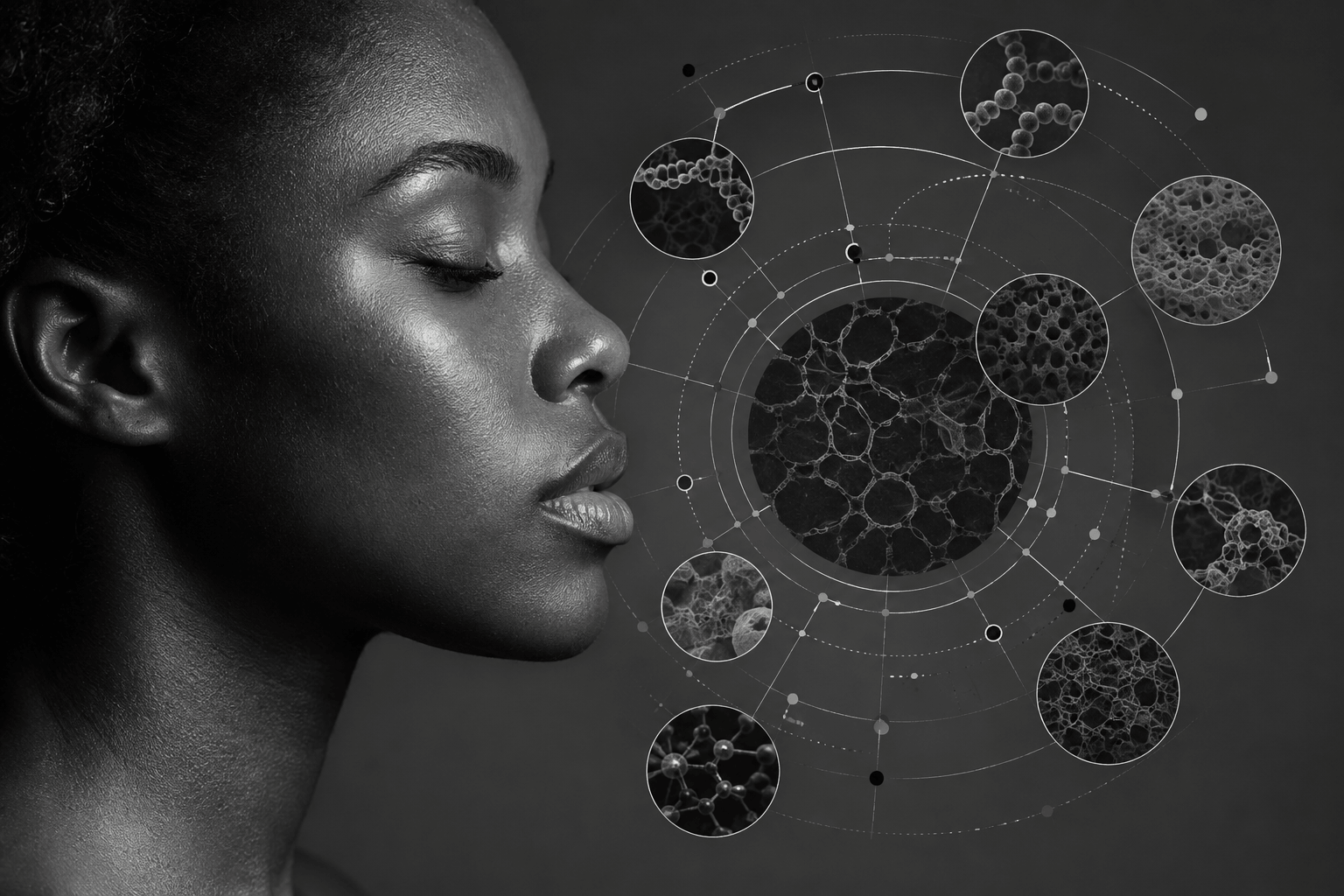
Glycation is one biological pathway among many that influence skin behavior. Understanding the skin begins with physiology—not judgment.
Walk through the skincare aisle or spend a few minutes scrolling through social media, and you'll likely encounter a familiar message:
"Sugar ages your skin."
"Stop eating sugar if you want youthful skin."
"Prevent glycation by eating clean."
While these statements often contain a kernel of scientific truth, they also reveal a much larger problem within both wellness culture and esthetics education. Somewhere along the way, a complex biochemical process became transformed into a story about personal responsibility.
The conversation shifted from physiology to morality. And in doing so, we risk overlooking the very biology we claim to understand.
What Glycation Actually Is
Glycation is neither good nor bad. It is simply a biochemical reaction.
It occurs when glucose or other reducing sugars bind non-enzymatically to proteins, lipids, or nucleic acids, forming compounds known as Advanced Glycation End Products (AGEs). Over time, these reactions may alter the structure and function of important proteins such as collagen and elastin, contributing to reduced tissue flexibility and resilience.
Within the skin, glycation has been associated with changes in collagen organization, decreased elasticity, impaired wound healing, and visible signs commonly associated with aging.
These are real biological observations. What becomes problematic is how the conversation is often presented.
The Problem with Simplified Narratives
In many beauty and wellness spaces, glycation is reduced to a remarkably simple equation: Sugar equals aging. That narrative is attractive because it offers an easy explanation for a complicated process. Unfortunately, biology rarely works that way.
Human physiology is influenced by countless interacting systems, many of which extend far beyond individual food choices. By reducing glycation to diet alone, we unintentionally create the impression that aging or even chronic illness is simply the result of poor decisions.
That is neither biologically accurate nor ethically responsible.
The Body Is Not a Morality Tale
Type 1 diabetes provides one of the clearest examples of why simplistic explanations fail. Type 1 diabetes is an autoimmune disease.
It is not caused by eating excessive amounts of sugar.
The immune system mistakenly destroys the insulin-producing beta cells of the pancreas, fundamentally altering glucose regulation. No amount of dietary virtue prevents that autoimmune process.
Even discussions surrounding Type 2 diabetes deserve greater nuance.
Research consistently demonstrates that glucose regulation is influenced by numerous interacting factors, including genetics, chronic stress, endocrine function, sleep quality, environmental exposures, socioeconomic conditions, medications, obesity, inflammation, physical activity, food accessibility, and healthcare access.
Diet certainly matters. But diet exists within a much larger biological and social context. The body is not a courtroom assigning guilt. It is a complex adaptive system responding continuously to both internal physiology and external environments.
Beyond Blood Sugar: The Biology of Glycation
Even among individuals without diabetes, glycation is influenced by multiple biological pathways.
Oxidative stress accelerates molecular damage.
Chronic inflammation alters cellular function.
Ultraviolet radiation increases reactive oxygen species.
Smoking introduces additional oxidative burden.
Psychological stress elevates cortisol, affecting inflammatory signaling and metabolic regulation.
Natural aging gradually changes collagen turnover.
Every one of these factors contributes to the biological environment in which glycation occurs. To attribute the entire process to a single nutrient is to ignore decades of physiology.
M-R-B-U-P® and a Behavior-Based Perspective
This complexity is precisely why Beautélanin® approaches skin through the M-R-B-U-P® Framework rather than isolated symptoms. When a practitioner observes changes associated with glycation, the question is not: "What food caused this?"
Instead, the framework encourages broader observation across five interconnected domains of skin behavior.
M — Melanin Density
Melanin-rich skin possesses unique biological characteristics that influence how environmental stressors, oxidative damage, inflammation, and ultraviolet exposure interact with the skin over time. While glycation itself does not selectively target one skin tone over another, the visible consequences of inflammation, collagen remodeling, and tissue injury may present differently depending on baseline melanin density and pigment behavior.
R — Reactivity
Chronic low-grade inflammation, sometimes called "inflammaging," may amplify oxidative stress and influence glycation-related tissue changes. Rather than asking whether sugar alone explains skin aging, practitioners should consider whether inflammatory signaling is contributing to the skin's current behavior.
B — Barrier Behavior
A resilient barrier cannot stop glycation, but it can reduce unnecessary inflammatory burden. Barrier disruption increases transepidermal water loss, alters immune signaling, and may compound oxidative stress. Supporting barrier health becomes one component of supporting healthier skin, not because it reverses glycation, but because it strengthens the biological environment in which the skin functions.
U — UV Legacy
Ultraviolet radiation remains one of the most significant contributors to oxidative stress and collagen degradation. UV exposure interacts with glycation pathways by increasing reactive oxygen species, accelerating extracellular matrix remodeling, and placing additional demands on the skin's repair systems. Sun history therefore becomes an important part of understanding overall skin behavior.
P — Pigment Memory
Melanin-rich skin often remembers inflammation long after the original event has resolved. Chronic inflammation associated with systemic disease, barrier disruption, environmental stressors, or procedural injury may leave pigmentary changes that outlast the inflammatory process itself. Understanding this history helps practitioners support the skin more thoughtfully rather than focusing solely on visible discoloration.
The Social Biology of Skin
Perhaps the greatest limitation of many anti-glycation conversations is that they separate biology from lived experience.
Not everyone has equal access to fresh foods.
Not everyone has access to preventative healthcare.
Not everyone can afford insulin.
Not everyone sleeps eight uninterrupted hours.
Not everyone lives in environments free from chronic stress.
Not everyone experiences healthcare without bias.
The social determinants of health profoundly influence physiology. Chronic psychological stress contributes to sustained cortisol elevation, immune dysregulation, inflammatory signaling, and metabolic dysfunction.
These are biological realities, not character flaws. To discuss glycation without acknowledging these influences is to tell only part of the story.
A More Ethical Way to Teach Glycation
At Beautélanin®, we believe glycation should be taught as one biological pathway among many that influence skin aging and tissue resilience.
It deserves to be understood within the broader context of metabolism, inflammation, oxidative stress, ultraviolet exposure, barrier function, genetics, environmental influences, and overall health. Most importantly, it should never become a tool for blaming clients.
Education should increase understanding. Not shame.
Clients do not need lectures about moral failure. They need practitioners who understand physiology well enough to recognize that skin behavior reflects an extraordinary network of biological systems interacting with lived experience.
Looking Beyond the Molecule
Perhaps the most important lesson glycation teaches us has very little to do with sugar. It reminds us that the skin is never responding to a single variable.
Every wrinkle.
Every pigment change.
Every alteration in barrier function.
Every inflammatory response.
Every shift in resilience.
Exists within a much larger biological story.
That story includes genetics.
Environment.
Immune function.
Stress.
Healthcare access.
Nutrition.
Sleep.
Aging.
And countless factors that no single skincare product or social media slogan can fully explain. Understanding that complexity does not weaken esthetics. It strengthens it.
Because the purpose of skincare education is not to simplify people into blame. It is to understand the remarkable biology that makes each person's skin uniquely their own.
Closing Reflection
The skin does not keep score of our worthiness. It reflects biology, environment, adaptation, and lived experience. Our responsibility as practitioners is not to judge the story written on the skin, but to understand it.
Beautélanin™ articles are for education only and do not replace medical advice.
