
The Day Dermalogica Walked Into Our Classroom
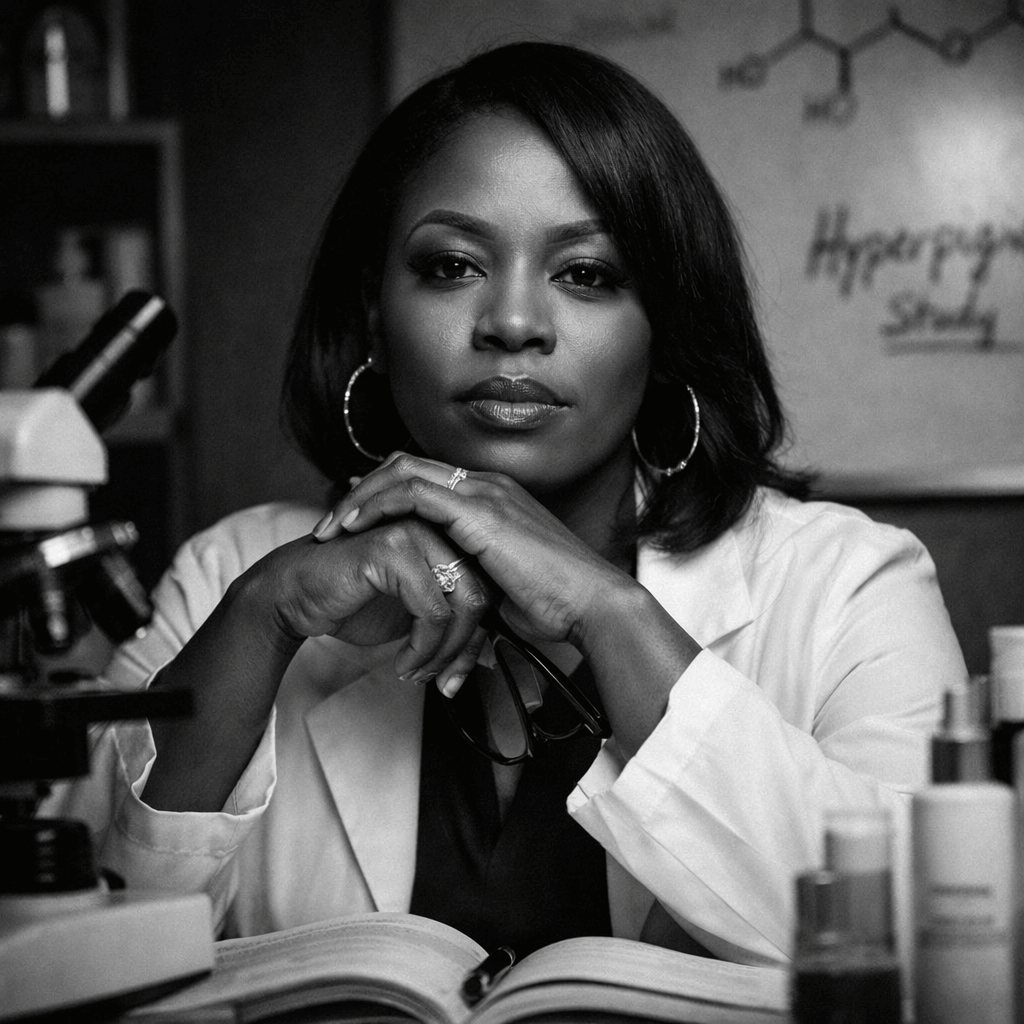
There are two kinds of product reps who walk into an esthetics classroom:
1. The ones who come to impress us.
2. The ones who come prepared.
And if you’ve ever been the Black woman in the room who actually studies skin science instead of memorizing marketing copy, you know exactly which one survives.
Dermalogica’s representative came to our class a few weeks ago with genuine professionalism. Not polished-to-perfection, not overconfident, not performing, just present. She didn’t pretend to have all the answers. She didn’t fake clinical terminology she didn’t understand. She didn’t sell fantasies. She taught.
And that alone already put her in a different category.
Because earlier this year, we had another brand rep , SkinScript, who came in with the classic industry formula:
diversity rhetoric + vague ingredient claims + zero receipts.
She said “diversity” was their founding pillar, yet somehow managed to give a full presentation without showing a single melanin-rich face.
That’s when my classmates learned that if you say the word “melanin” in a room with me, you better have clinical studies to back your claims and be ready to discuss more than Fitzpatrick 3.
So, a few weeks ago, when Dermalogica began explaining their exfoliants, serums, and peels, the room slowly looked over at me like:
“Judy… be nice.”
And I was.
But I also wasn’t going to let the moment pass without asking the questions that matter; not just to me, but to every future esthetician who will touch Black and brown skin.
So I asked:
“Where can I find Dermalogica’s peer-reviewed clinical studies on deeper melanin densities?
Specifically Fitzpatrick 4, 5, and 6?”
She didn’t flinch.
She didn’t bluff.
She didn’t pretend she had an answer she didn’t have.
She said, calmly and honestly:
“That’s a great question. I want to double-check the exact location for you, because it’s not on the regular website. It should be in our business resources section once you open a professional account.”
That honesty right there?
That earned her my respect.
Because in this industry, I’ve seen far too many professionals talk around melanin rather than talk to it.
They’ll teach exfoliation without discussing inflammation.
Teach lasers without discussing risk.
Teach acids without understanding how melanocytes respond to trauma.
Teach “brightening” while ignoring the anti-Black history embedded in the language.
But she didn’t do that.
She kept it real. She kept it transparent. She kept it professional.
So yes, my classmates were laughing as soon as I raised my hand. They were whispering, “Oh lord, here she goes…” They were bracing themselves because they know:
I don’t let brands slide when the conversation includes melanin.
But what they don’t say out loud is this:
some of them rely on me to ask the questions they’re may not be willing to ask.
I’m not trying to embarrass anyone. I’m protecting my future clients. I’m holding the industry accountable. I’m building a new standard, one that the textbook refuses to teach.
And truthfully, I enjoyed this rep. She listened. She answered what she could. She admitted what she didn’t know.
That is leadership.
That is integrity.
That is the energy this industry needs more of.
Because let’s be honest:
Clients will always underestimate their skin.
Product lines will always overestimate their claims.
And esthetics education will always underestimate melanin.
So if I don’t ask the question; who will?
This isn’t about being confrontational.
This isn’t about proving a point.
This is about reshaping an industry that has failed us for decades.
When I speak up, it’s not only for me. It’s for every future esthetician who will treat a complexion the industry still calls “specialty.” It’s for every esthetics student who has never seen themselves reflected in a textbook. It’s for every client whose skin deserves better than fear-based protocols and outdated scales.
Beautélanin™ was built for this.
NoirScience™ was built for this.
M-R-B-U-P™ was built for this.
That last time, it wasn’t a confrontation. It was a preview of the standard I intend to set.
And based on the way the room watched me: half laughing, half waiting, half relieved; I think they already know:
The future of melanin-safe esthetics is about to look very, very different.
